Backyard signals
Final master project
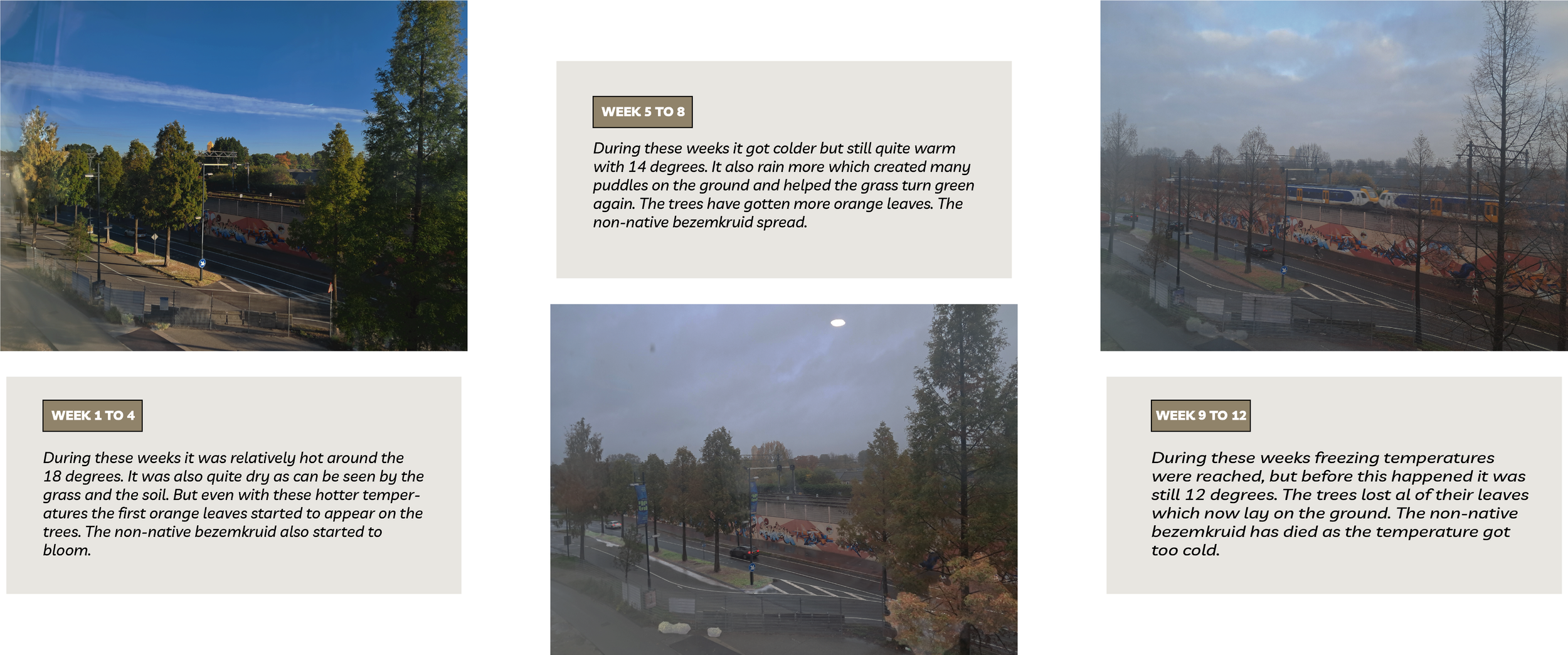
When talking about climate change the framing is often on country level or a global level. Think off the classic example of polar bears. These scenarios are looking at things that don’t impact you or your environment directly. Proximity to a problem makes people more willing to act, so if something is happening in their own community or backyard, they are more likely to act.
Which is why this project looks at climate change in the backyard and how a backyard-based design concept, that collects local environmental data, can meaningfully communicate climate-related changes to Dutch garden owners.
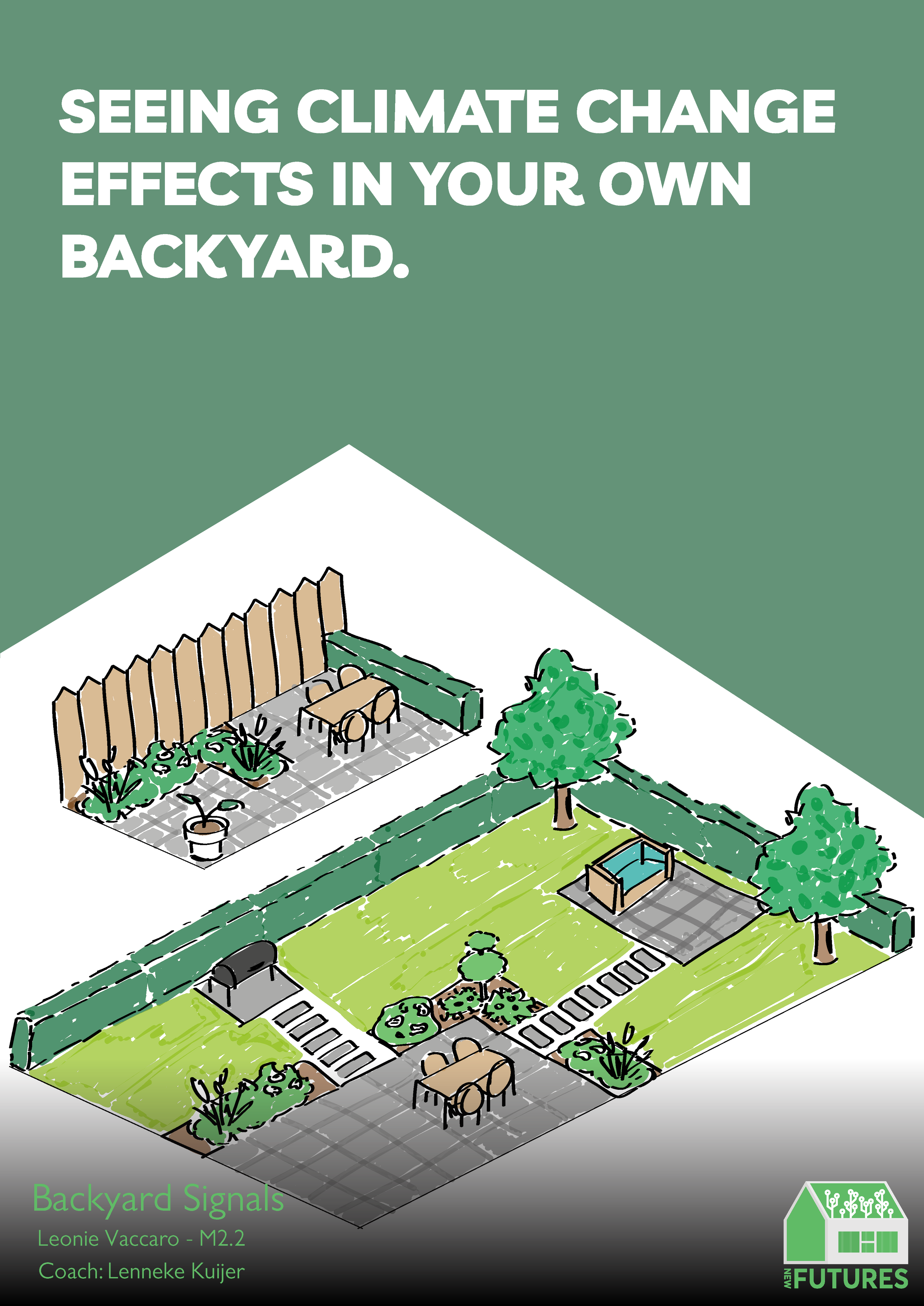
In my design process I explored how climate change effects the backyard. Through literature and an autoethnographic study. I also explored different sizes of backyards, as well as different resources and skill levels users have. Ten concepts were developed through iteration and a workshop with designers. From these concepts the mushroom sensor was chosen to be develop further as it looked at a variety of data and could be used in most gardens.
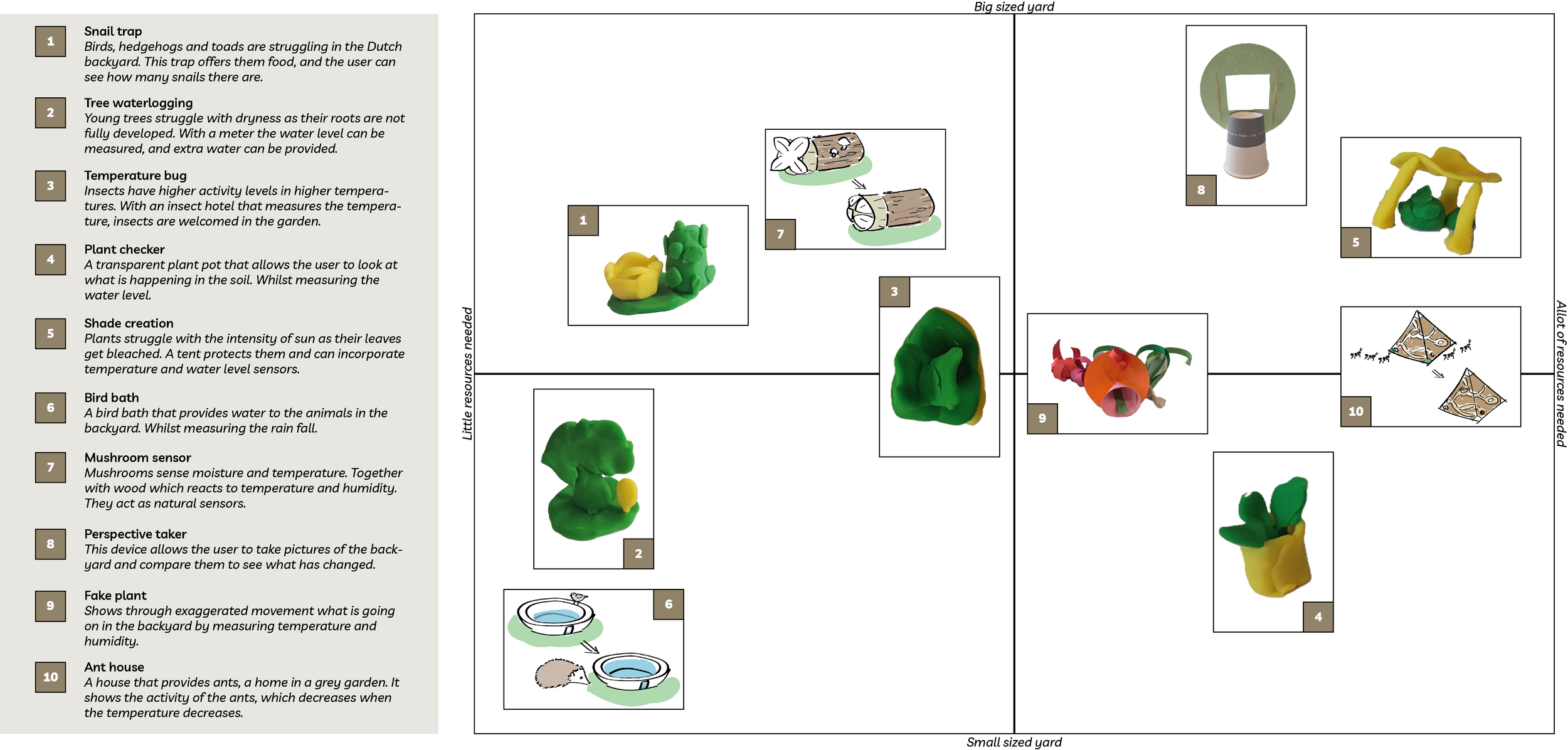
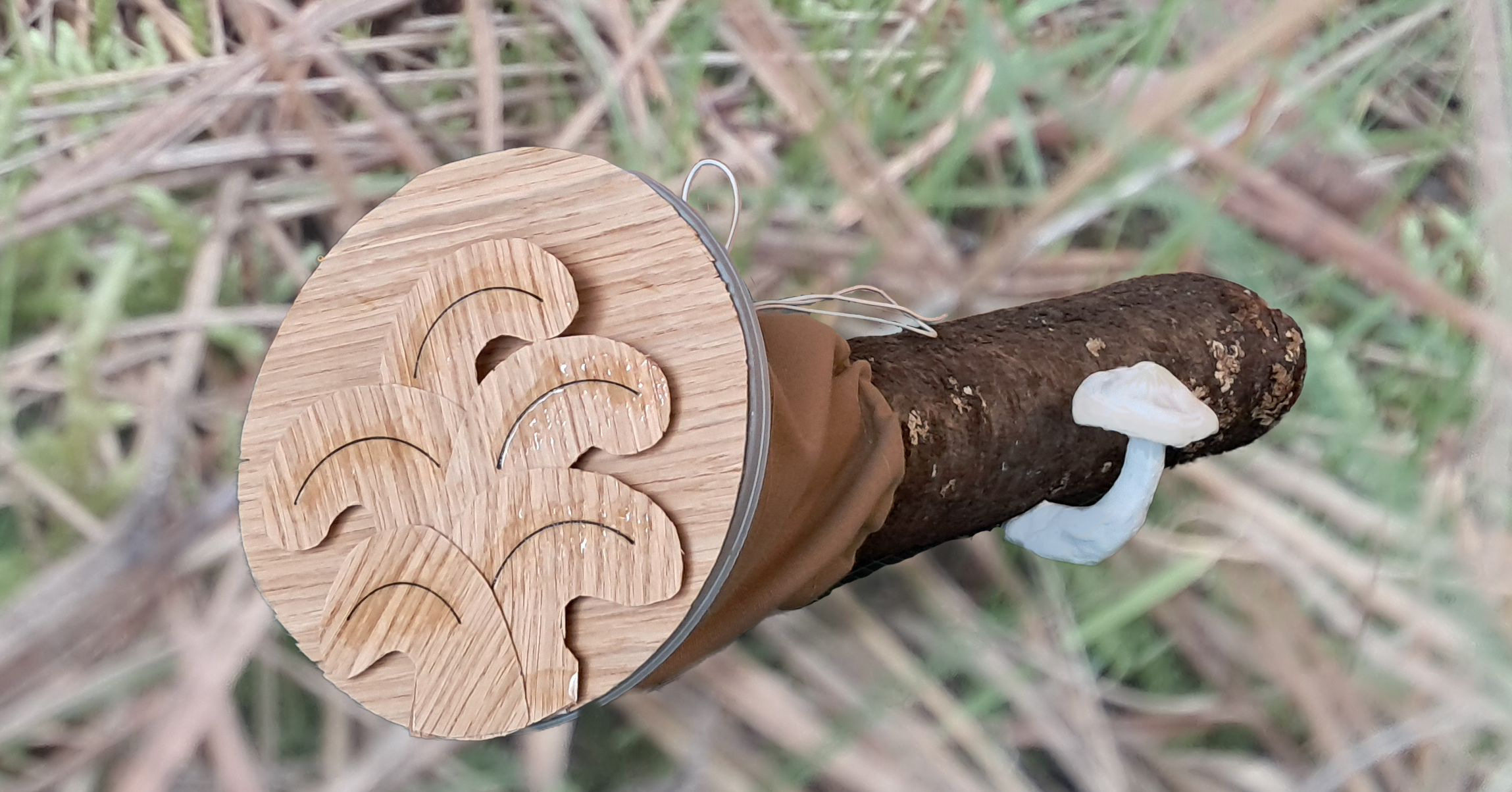
The mushroom sensor is a log of wood on which mushrooms can grow. They like moisture and a warm ground temperature and they dislike frost. Therefore, mushrooms act as a natural sensor. On the log is a cap that has veneer wood on it. The wood reacts to humidity and temperature which makes it flex and shrink. Inside the cap are sensors which measure humidity and temperature more precisely. It is companied by a digital platform, on which the long-term data is presented, and climate adaptation tips are given. These together allow the user to see how climate change effects their backyard.
Coach
Lenneke Kuijer
Year
January 2026
SOLONDRY
Research project
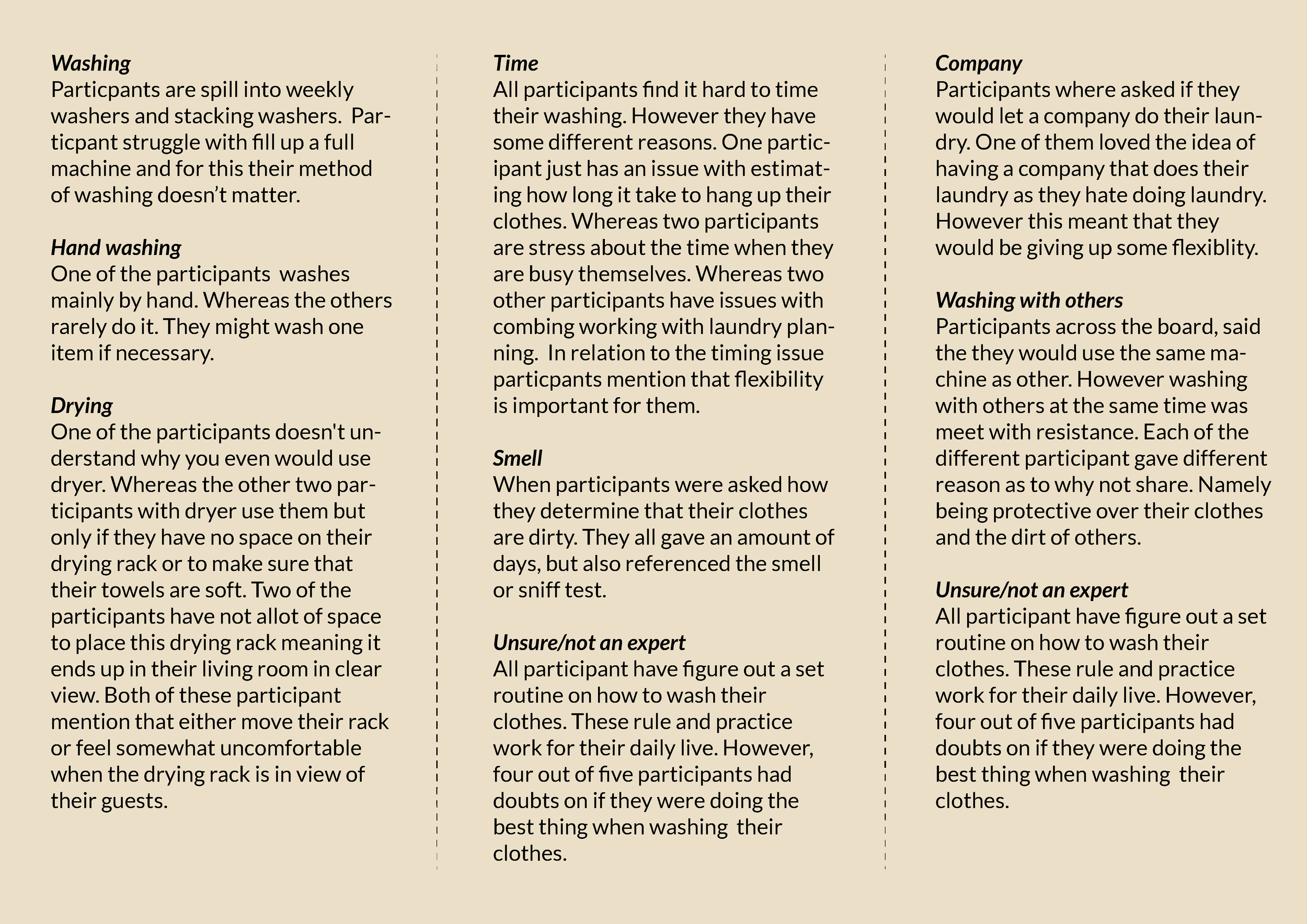
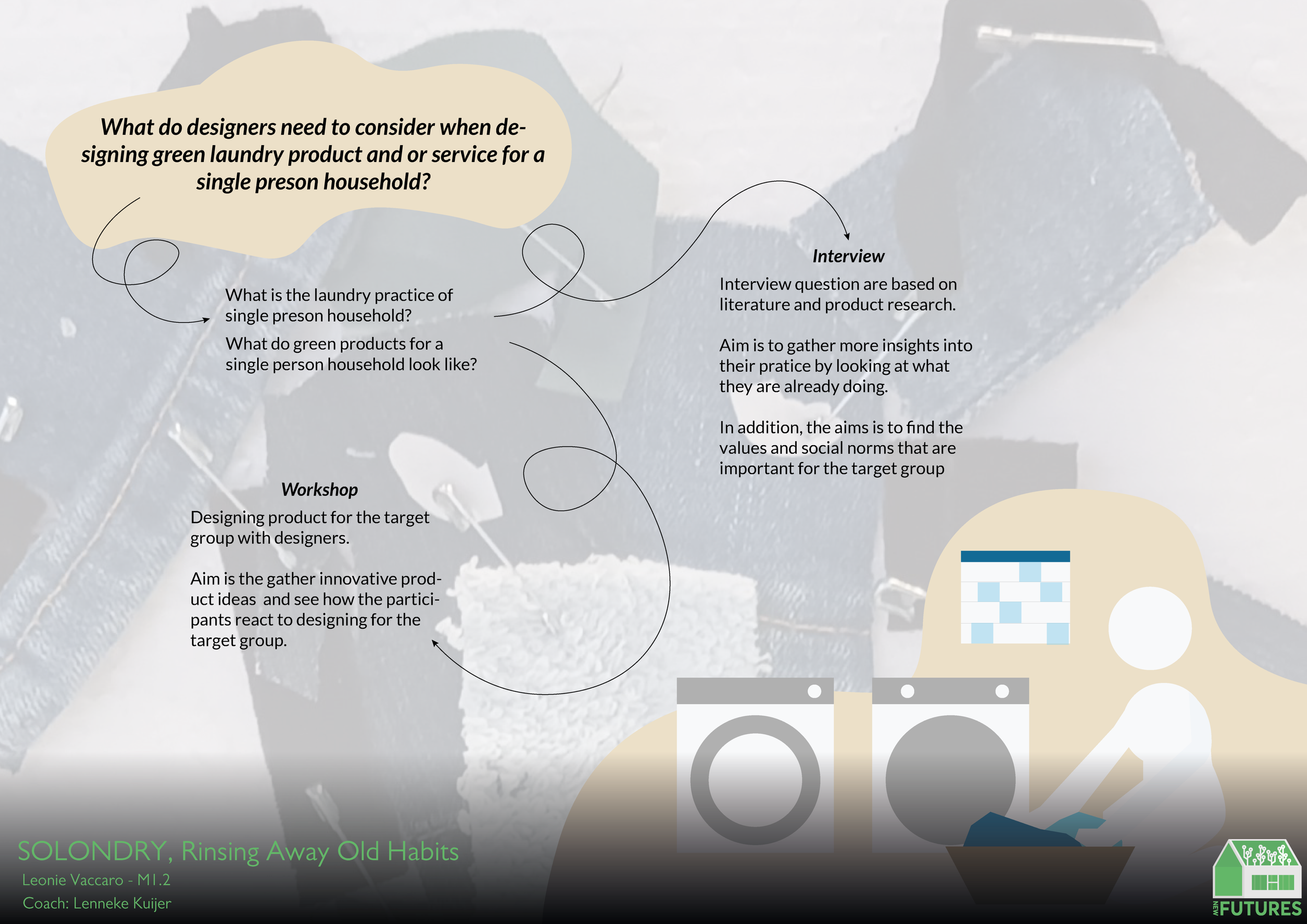
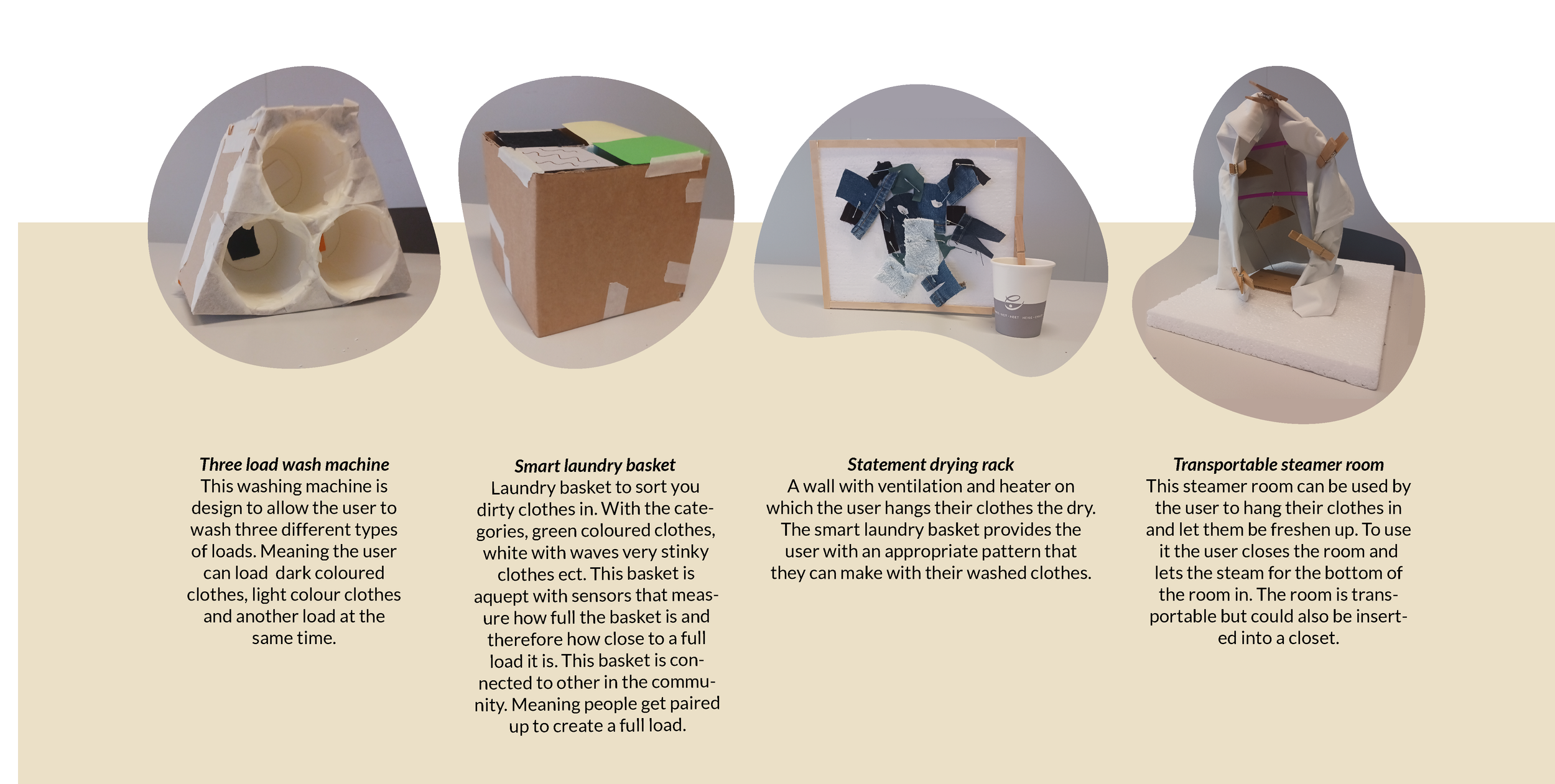
This research explores the question: What do designers need to consider when designing green laundry products and services for single-person households? To answer this, interviews were conducted with single-person households to uncover their laundry practices, values, and norms. Key insights include the difficulty of timing laundry, the reluctance to share machines due to privacy concerns, and a reliance on smell to determine cleanliness. These findings informed a workshop where designers created four concepts addressing or challenging these issues and norms. The results highlight the potential for innovative solutions that either accommodate existing practices, such as washing machines with customizable compartments, or push boundaries, like designs that encourage shared usage or visible laundry displays. This research concludes that designing for single-person households requires balancing personalization with sustainability while addressing the unique challenges of living alone.
Coach
Lenneke Kuijer
Year
January 2025
Smartbite
Group
Asavari Deshpande, Stephanie Kohnle and Karlijn Lemmens
Coach
Sander Lucas
Year
June 2024
Design project
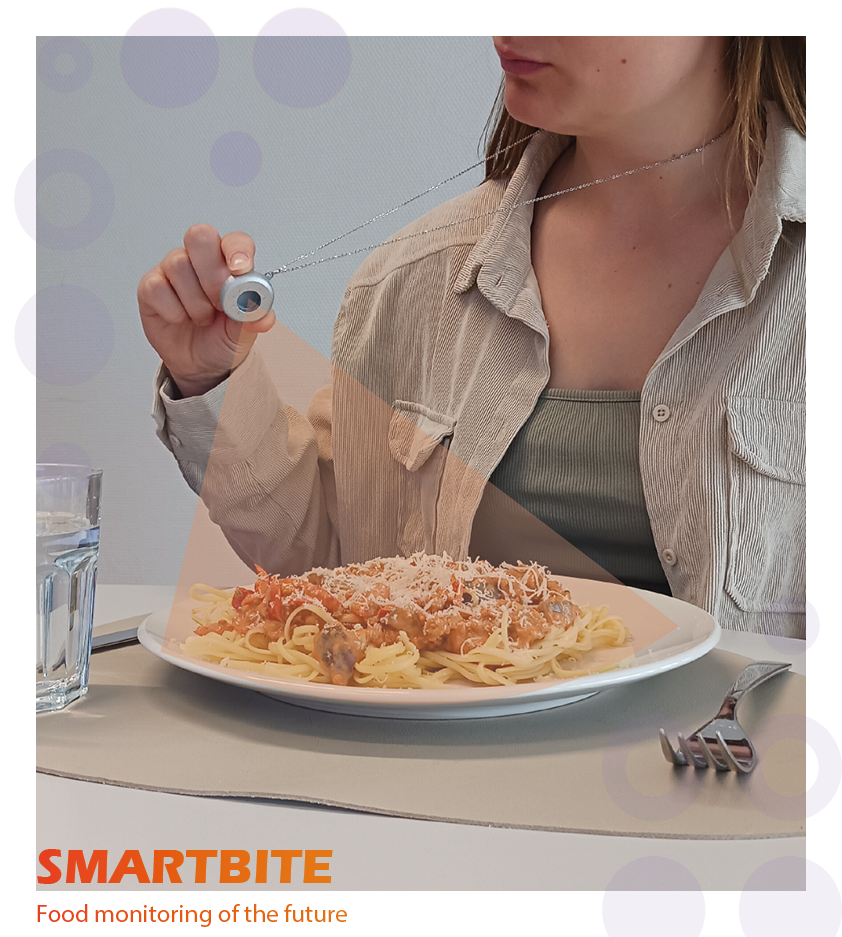
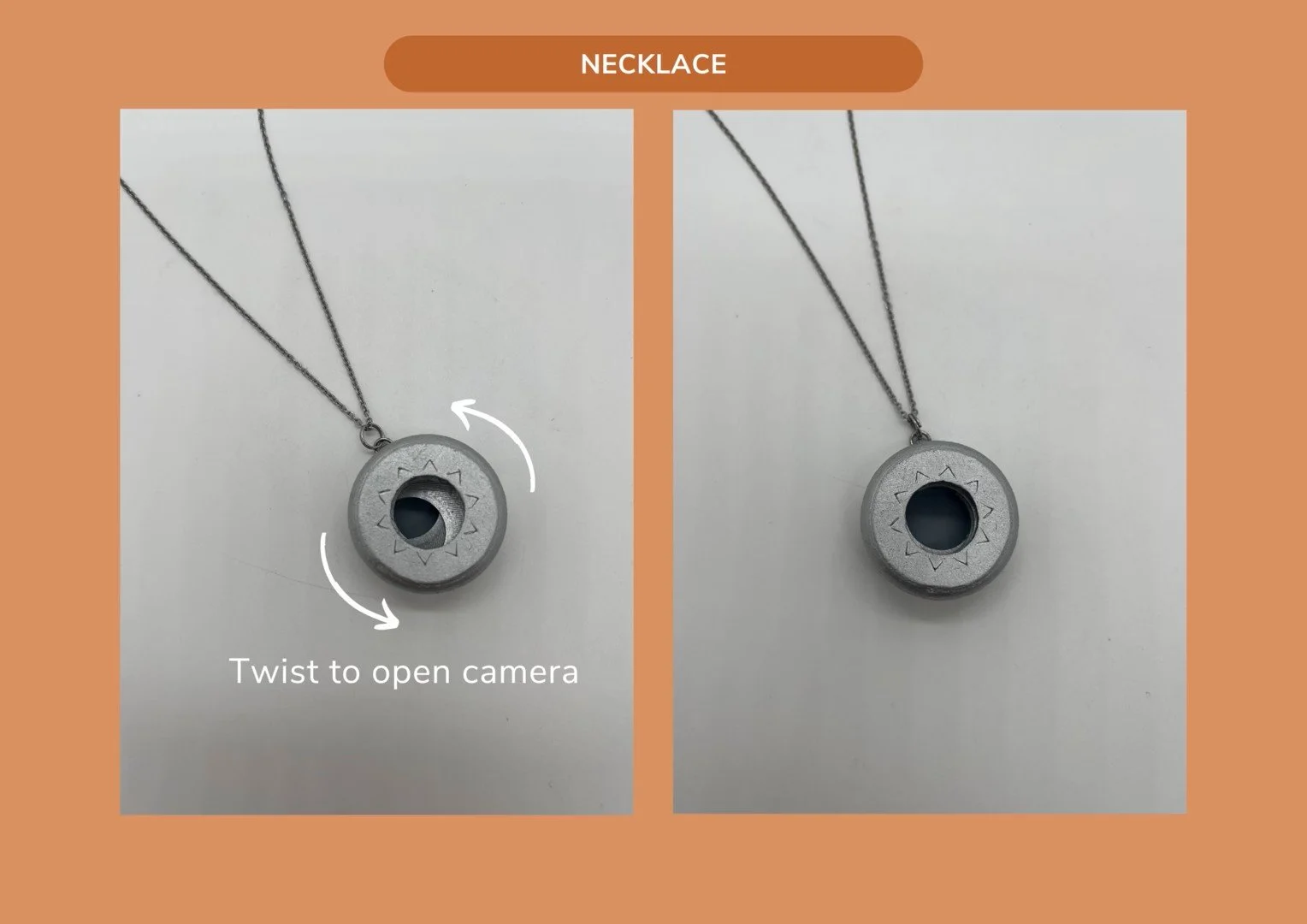
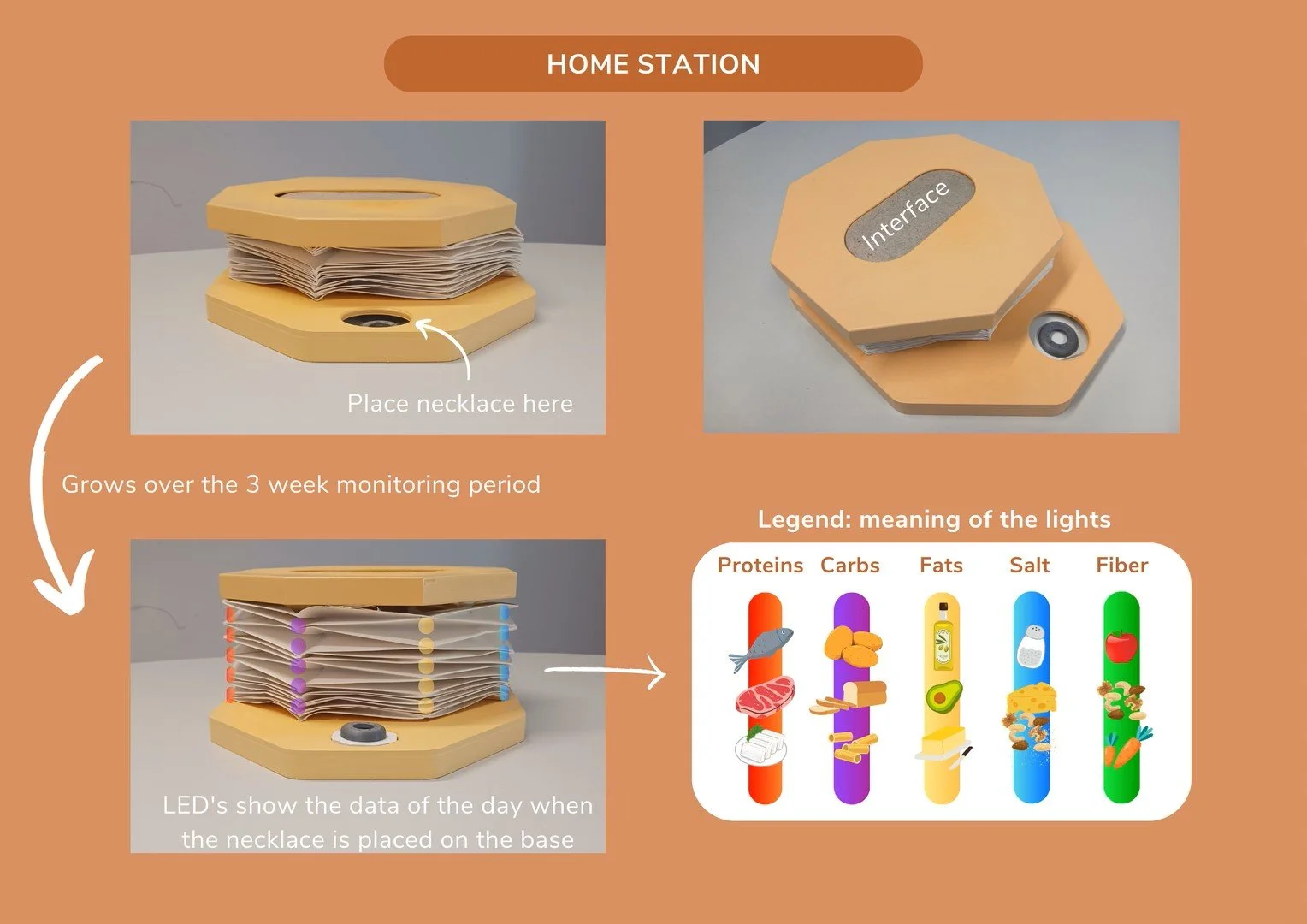
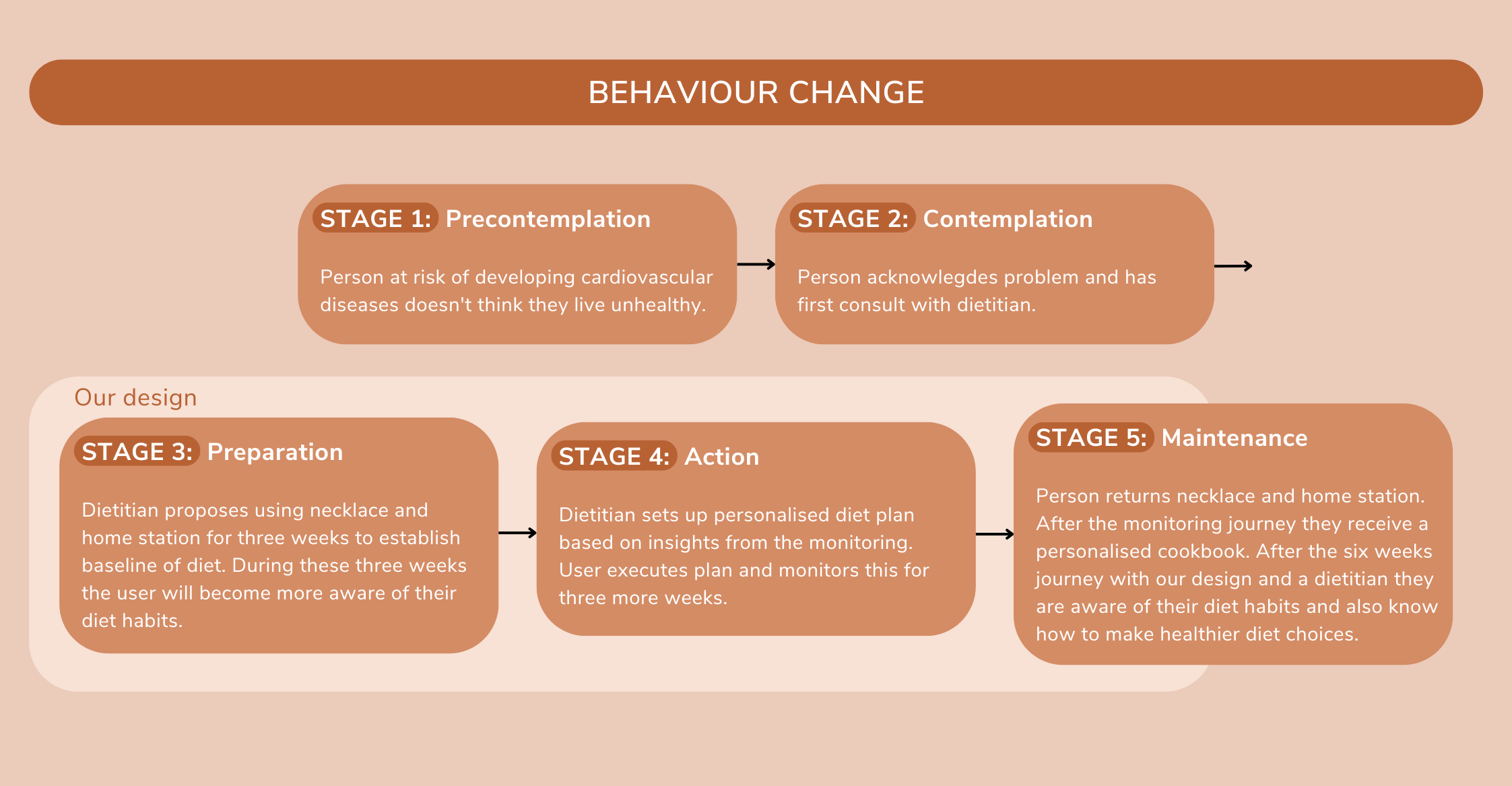
For people at risk of developing cardiovascular diseases, maintaining a healthy varied diet plays a big role in reducing the risks. You know those food tracking apps? We thought there should be a better and easier way to monitor your diet. For this, we made use of image recognition. This is realised in a necklace with a camera and some sensors. The idea is that you ‘scan’ the food on your plate with the necklace and it will identify all the foods.
The necklace works together with a home station that has multiple functions. It is a charger for the necklace and storage unit for the data, it visualises the data with lights and it provides information and reflective questions on the interface on top. Both the necklace and home station will be provided by a dietitian. The home station starts off flat and grows during the three week monitoring period. The dietitian will develop a suitable diet plan based on the data collected by the user. The simplified daily monitoring together with the reflective questions aims to make the user more conscious about their lifestyle, mainly focused on a varied diet.
Paper trail
energy explorer
Final bachelor project
Image you’re a student you just moved out and are confronted with allot of things for the first time. One of them being the energy bill. Which you never really seen before and don’t really understand, so you might download the app of your energy supplier. But this is just focus on money and numbers and does not really help you understand.
This is where Paper trail energy explorer comes in. It helps you explorer your energy data and give you suggestions on what you can do to reduce your energy consumption. It consist of energy measure cards and the exercise of annotating your energy data with activities, to give context . Thought out the exercise you are guided by the app. This exercise is repeat every month but will slightly differ based on if you reduce your consumption or not. So, if you did not reduce your energy consumption, the app will suggest different energy measure then before. Allowing to explore different ways of reducing your energy consumption, whitest creating a stronger connecting between the data and daily live.
Coach
Regina Bernhaupt
Year
January 2024


Wattson
Coach
Joep Frens
Year
June 2023
Design project
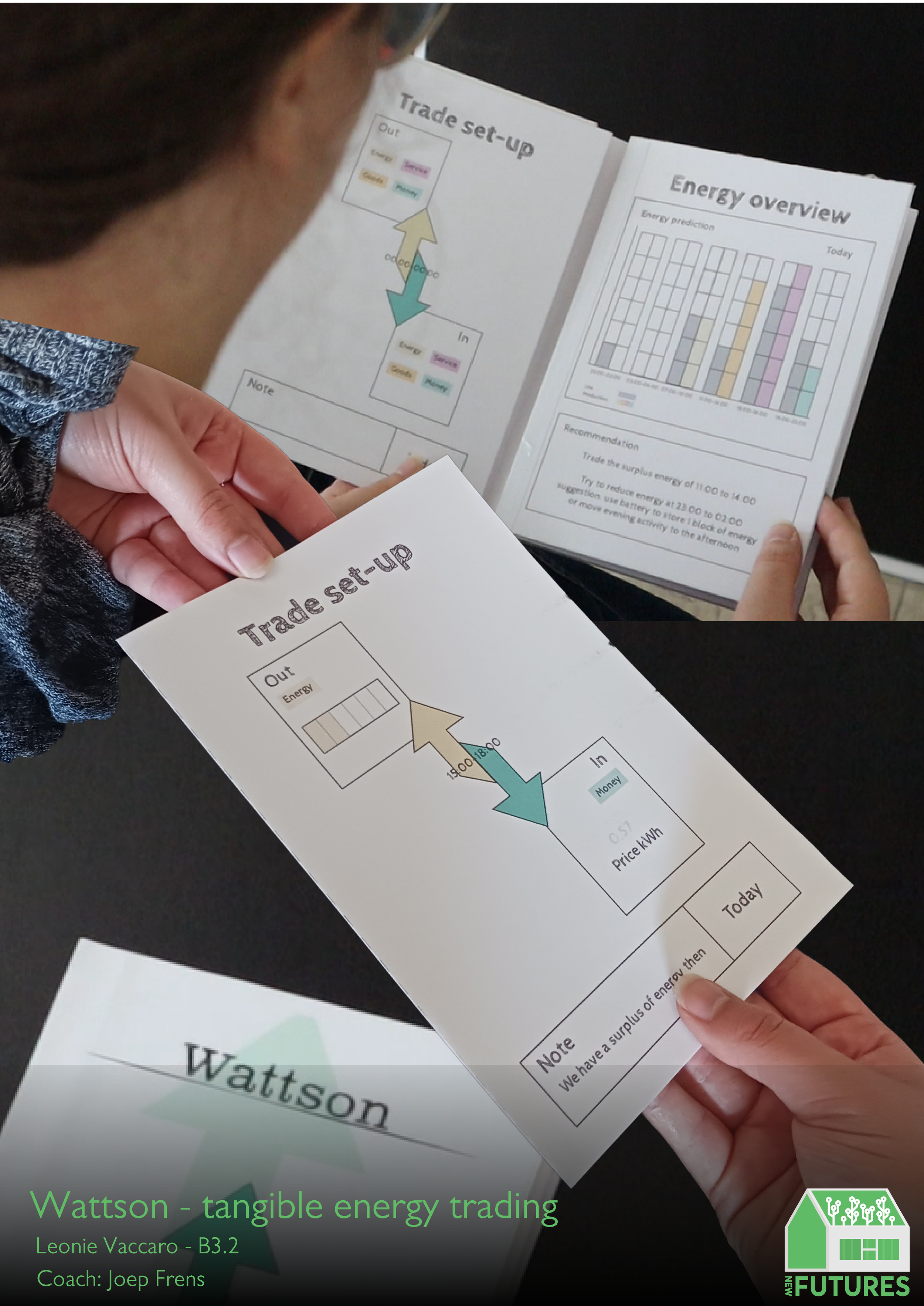
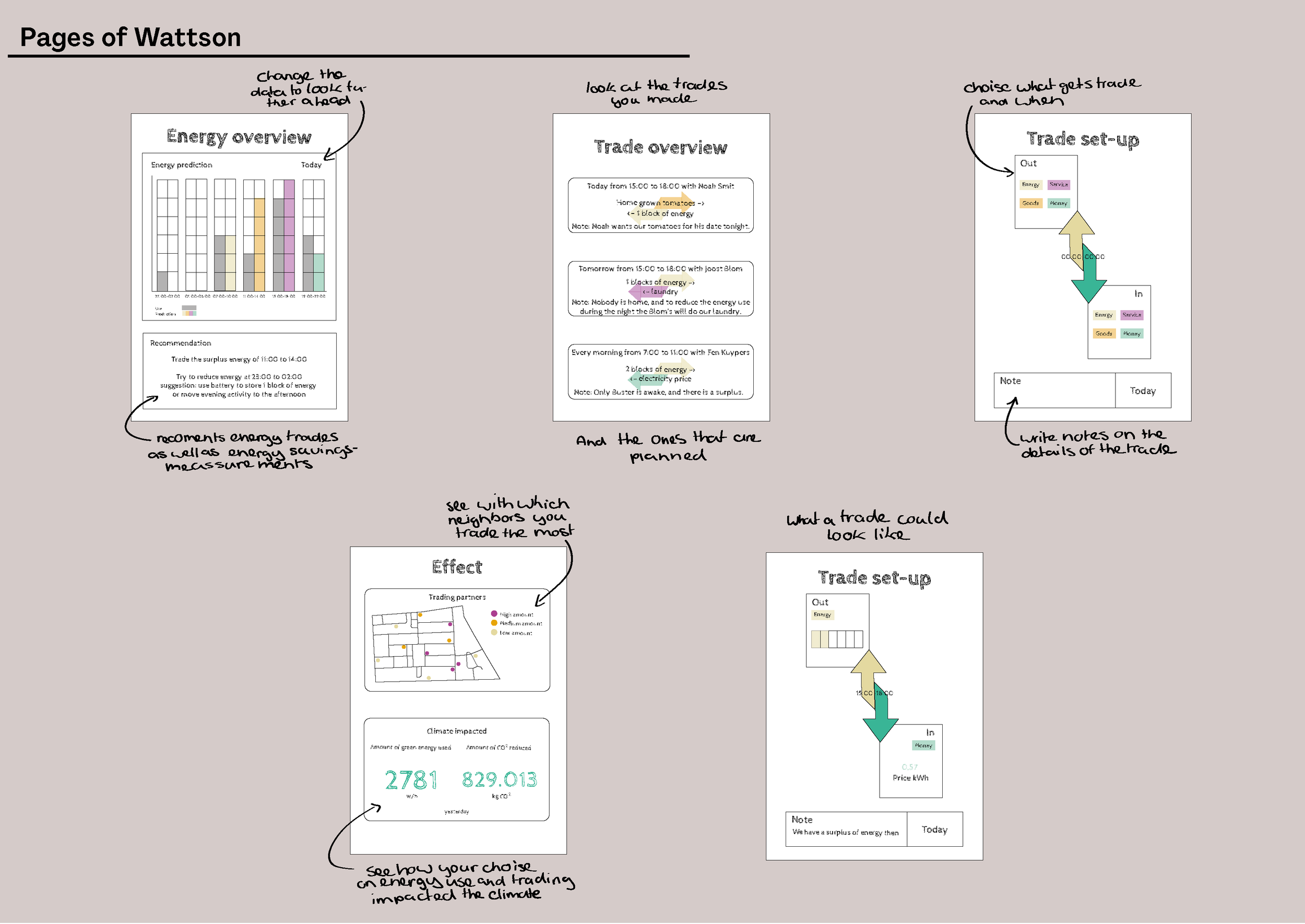
You might have look outside recently and seen, more and more solar panels on the rooftops. In the future, almost everybody will have a way of producing energy themselves. However, solar panels produce the most energy in the middle of the day, whereas energy use peaks during the morning and in the evening. Meaning you are dealing with a surplus of energy, you could store this in a battery or trade it.
This is where the Wattson book come in, it facilitates tangible energy trading. As, it allows the user to set-up a trade by looking at their predicted energy use and energy production for the future. The user can trade other things than energy, for example, you can also receive a service or good in exchange for energy. When a deal has been made, the two user swaps the trade pages with each other, to confirm the deal. Wattson encourages users to be more aware of their energy while strengthening the local community. As the trade have to be physically made but can happen anywhere.
Disregarding of the Exact Time
Group
Yanna van Straten and Jochen Verstegen
Coach
Dan Lockton
Year
June 2022
Research project
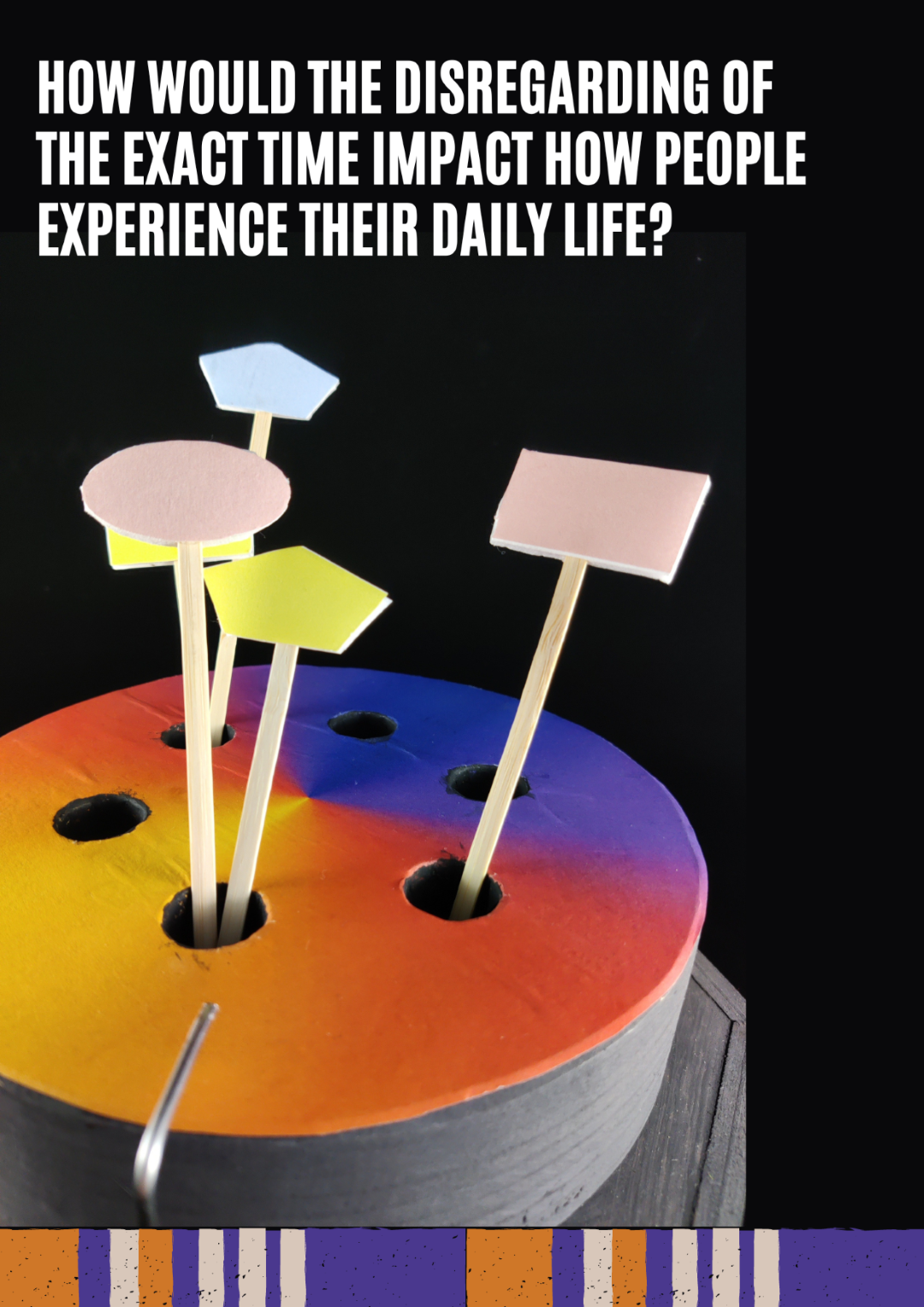
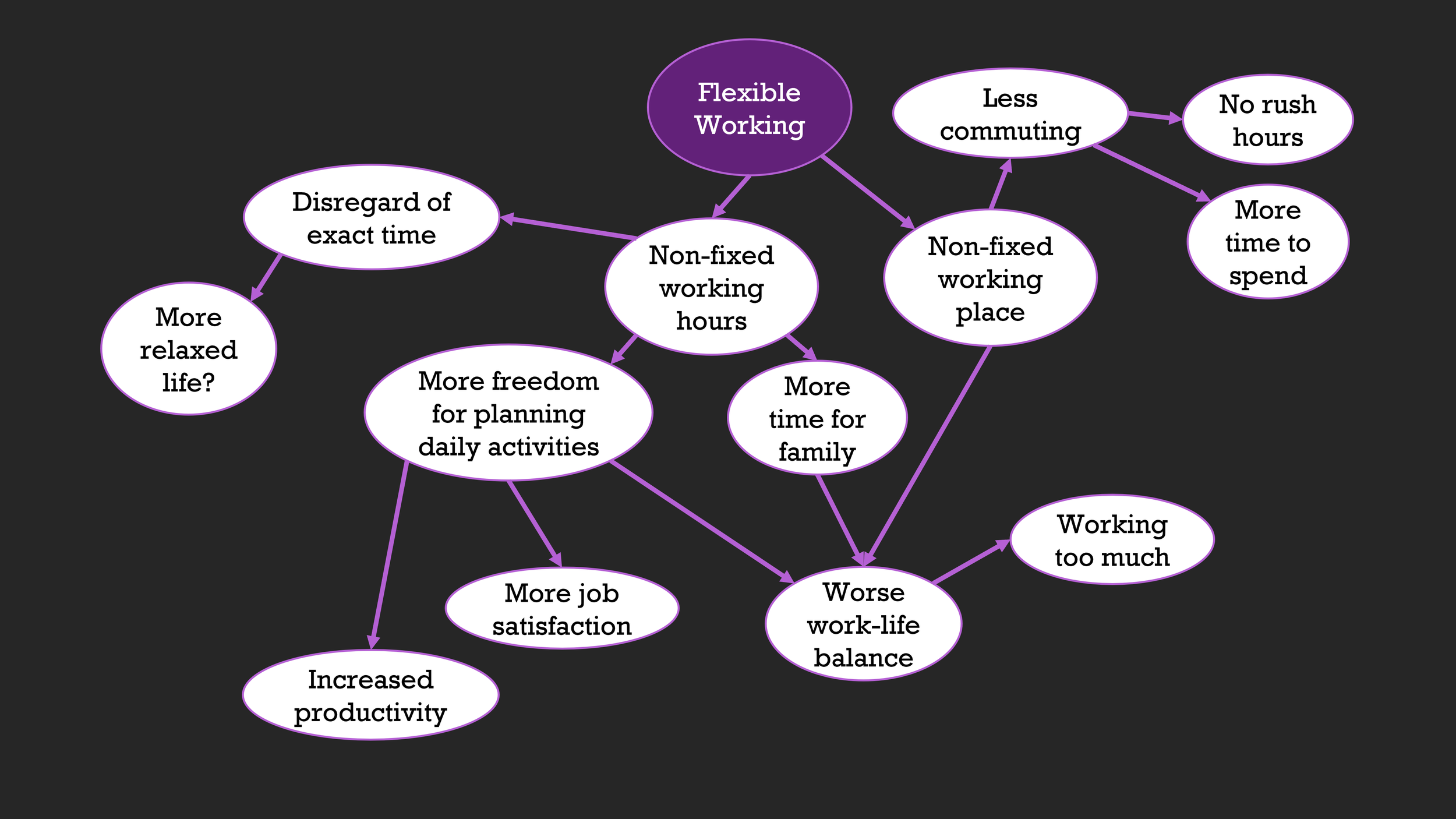
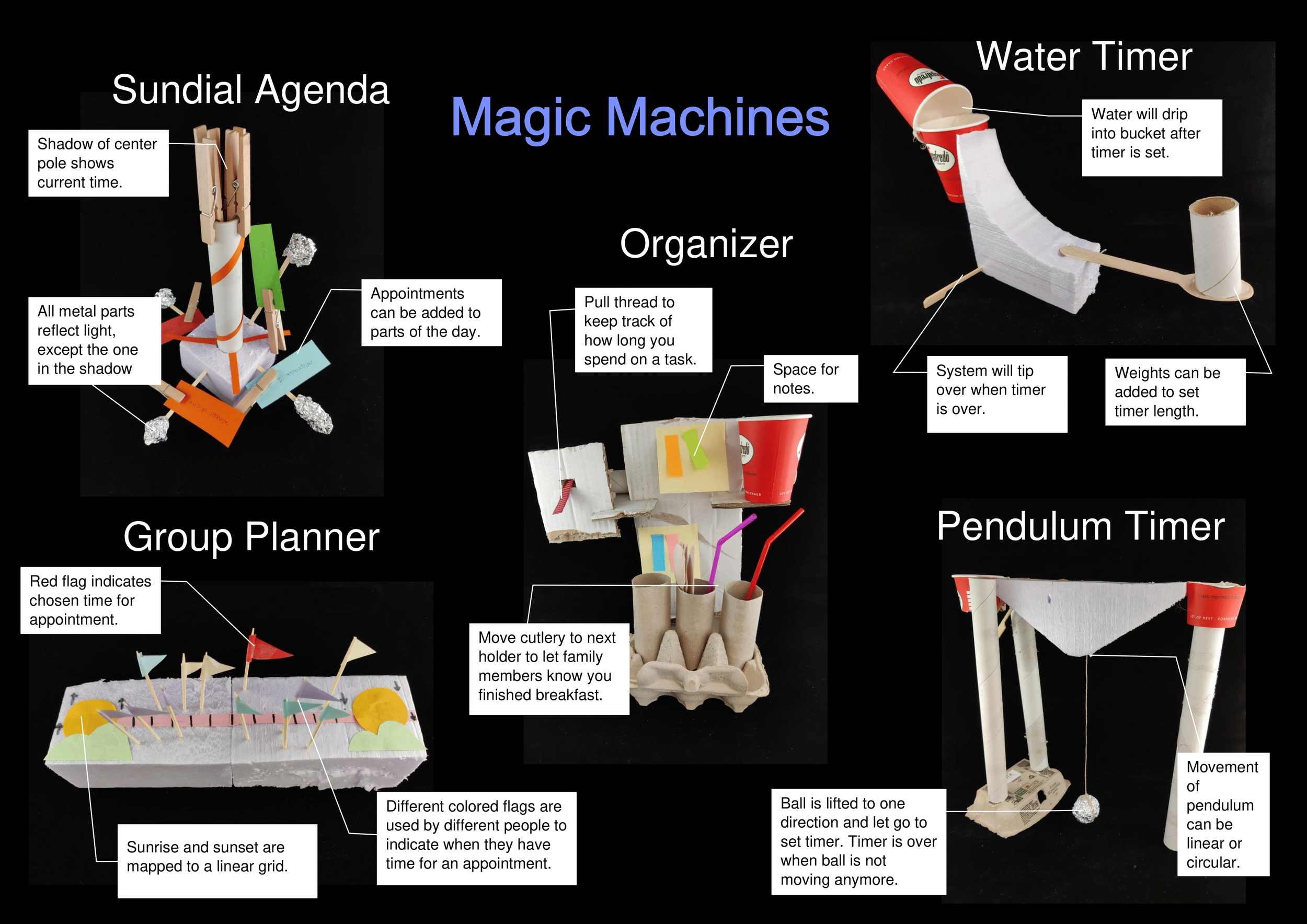
Our relationship with time has changed in the last few centuries. We identified some current trends that can have a significant impact on our relationship with time. These trends are the automation of production lines, the general trend of increased awareness and care of mental health, the rights of workers to ‘unplug’ from their work and the trend of flexible working. These trends may lead to a future where the exact form of time is not important anymore, meaning you don't have to know the exact time down to the minute. We performed multiple studies to explore this future: An autoethnographic study, a workshop and a diary study. This gave insights into what time is used for, what tools can be used for planning or keeping track of time and what the experience of daily life in this future could be like.
VersaTile
Group
Mae-Yin Chan, Serra van Santen and Florine Westen
Coach
Caroline Hummels and Cindy van Bremen
Year
January 2022
Design project
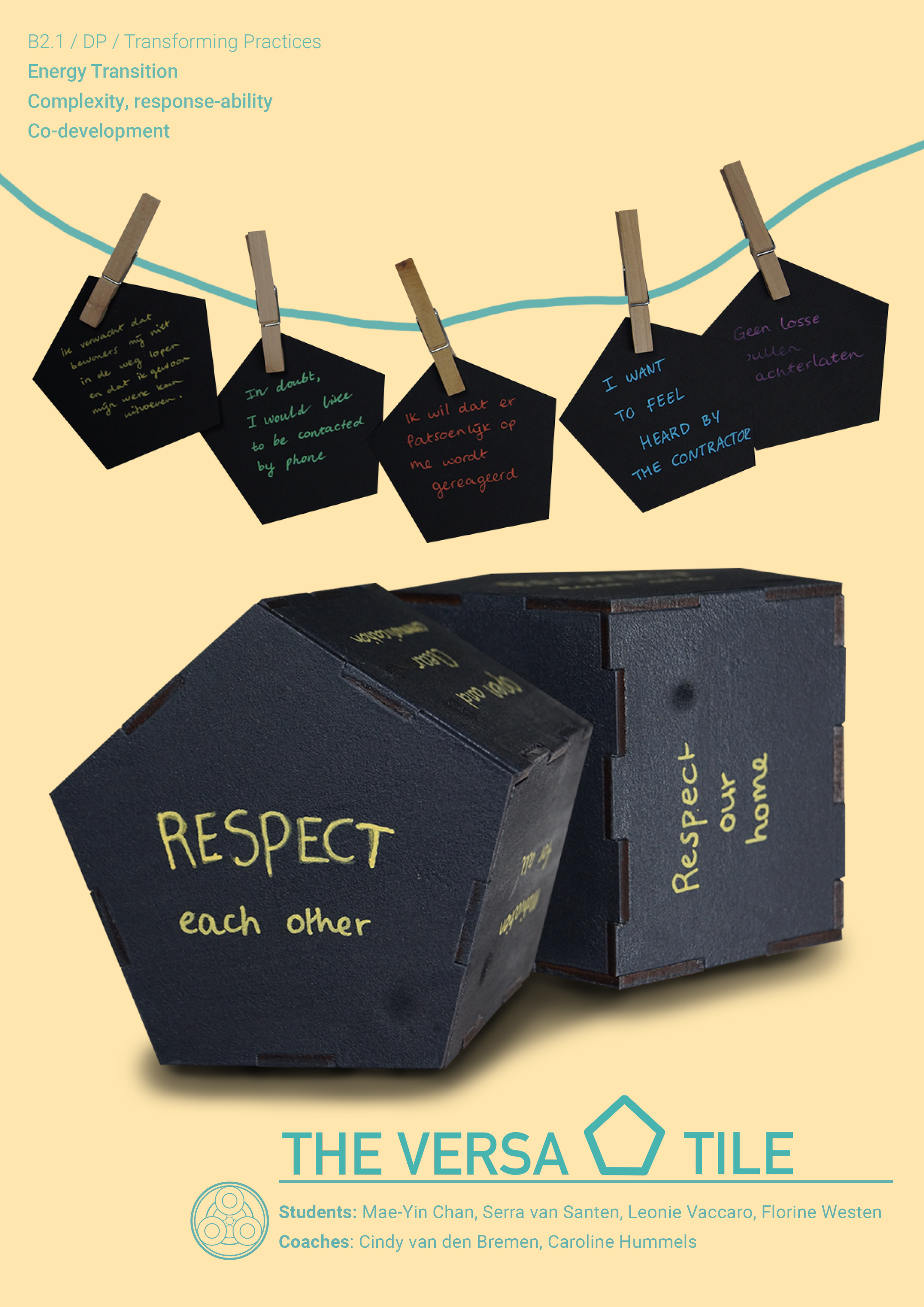
Relations within an energy transition project can often get very tense, especially relations between the contractor and residents of speckled property. Allowing for these complex relationships to breathe can benefit the relationships between all parties within the project.
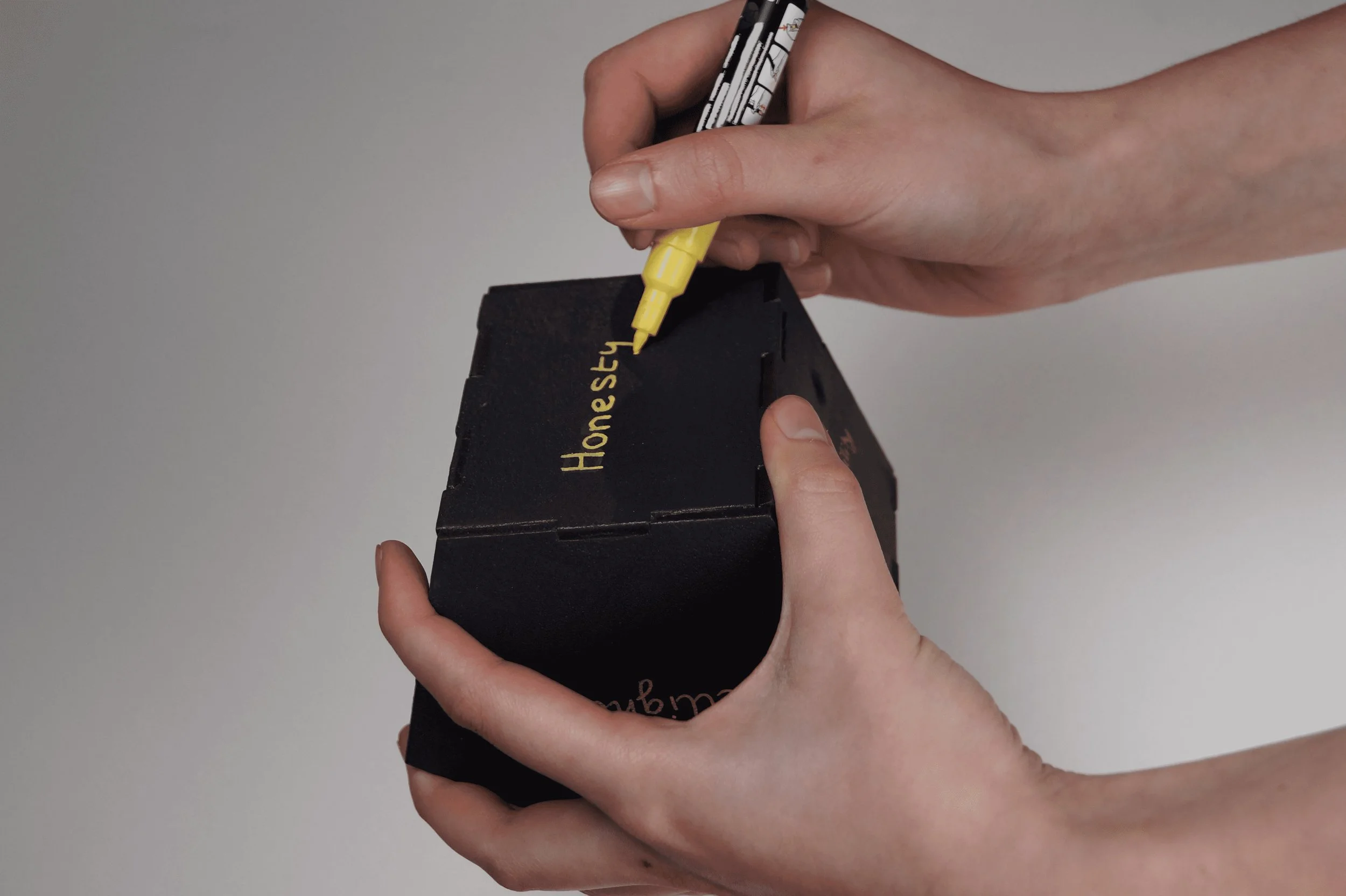
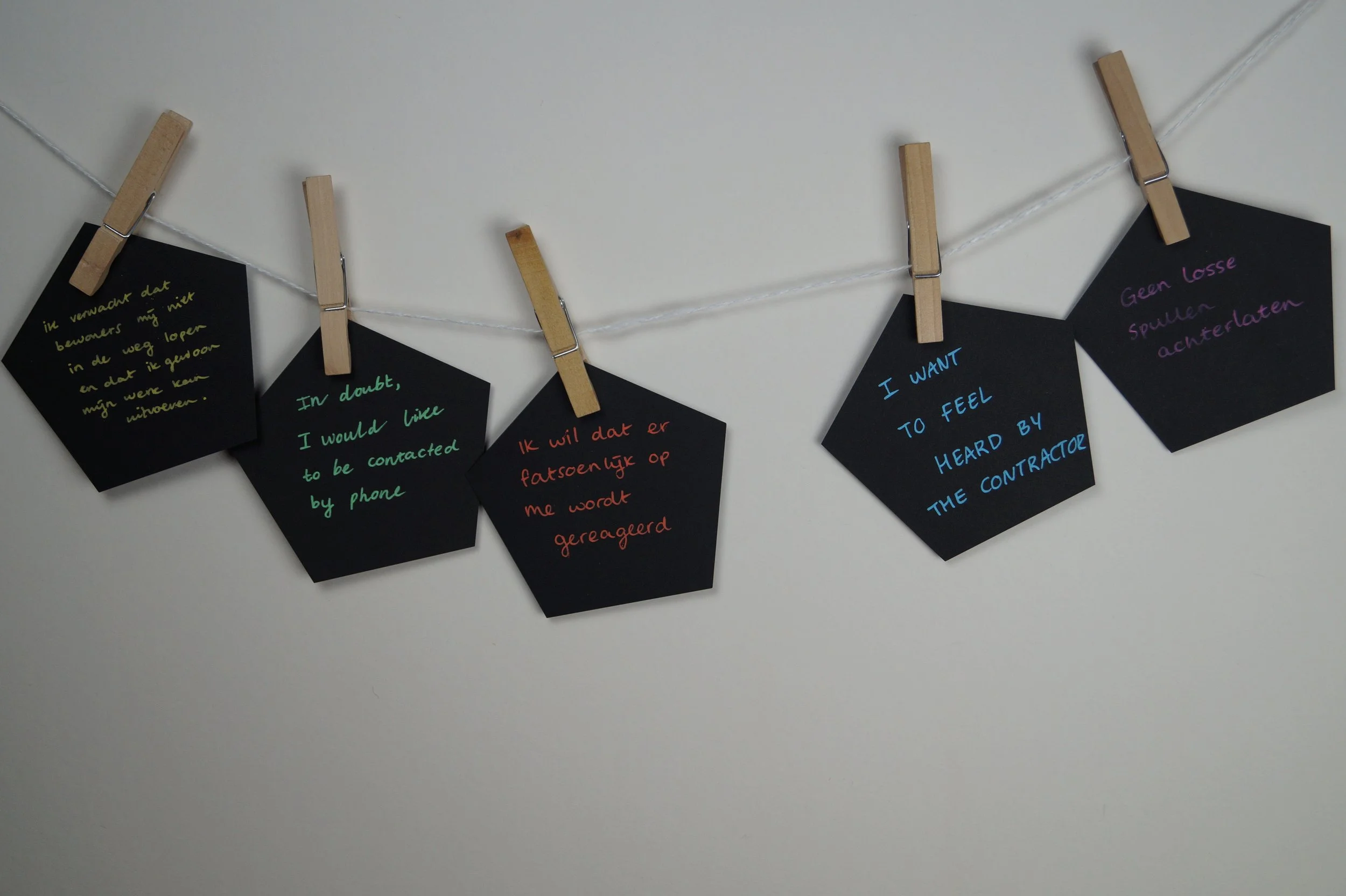
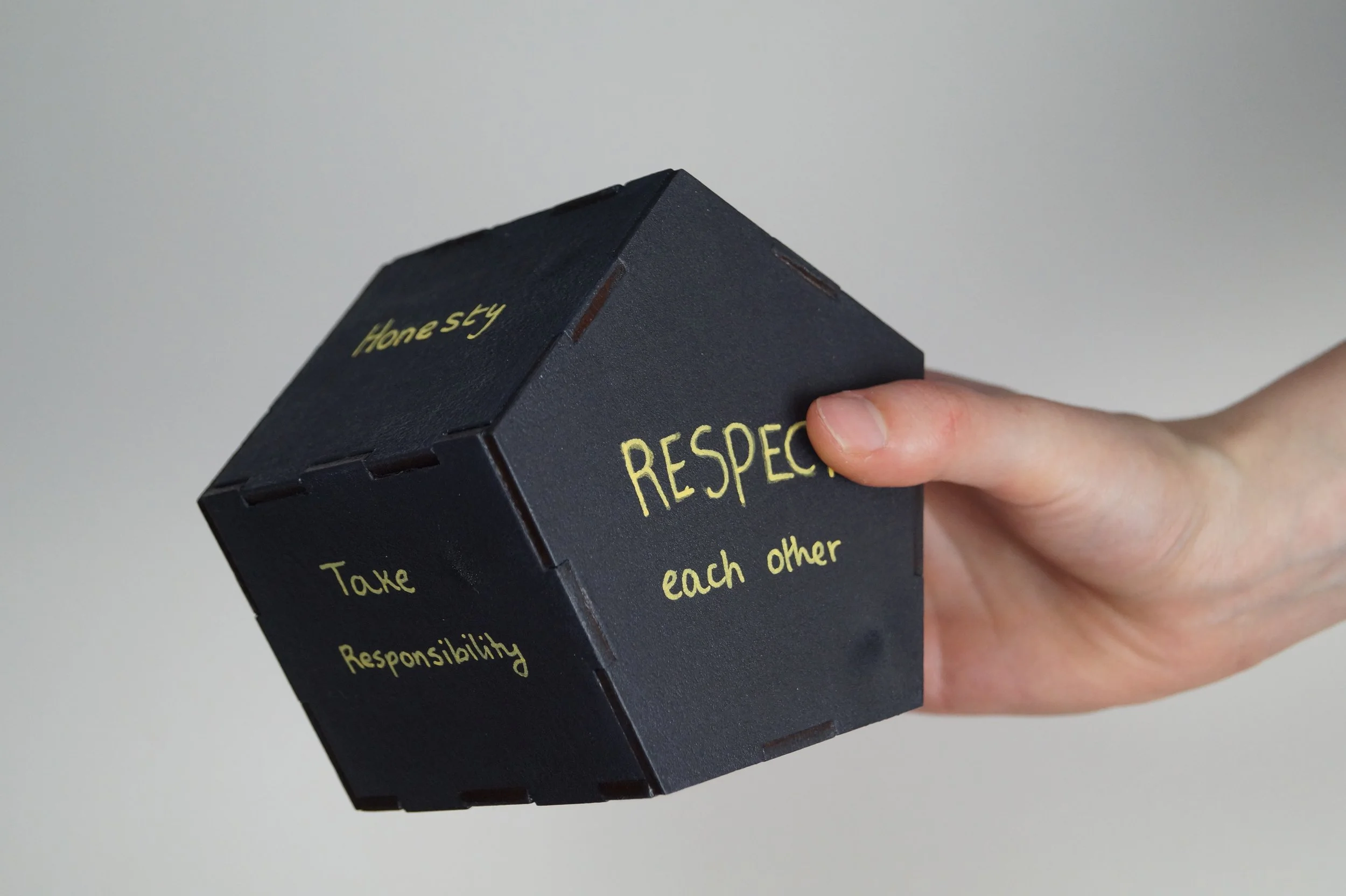
During an event where the contractors, residents, and liaison are present, an icebreaker is performed, followed by a deeper conversation. The goal of these activities is for the parties to get to know each other on a deeper level. Next, the Versa Tile is used by every individual. This is a tool that manages expectations from all parties and helps set up realistic agreements. The initial expectations are made into a garland that is hung on the construction site. Furthermore, the collaboration agreements are permanently put on the Versa Tile and taken home by all parties. The Versa Tile functions as a reminder of the agreements and scaffolds reflection during the process.
Physie
Group
Ian Bezemer, Amber Baars and Lara Sleutjes
Coach
Sander Lucas and Aaklash Jordy
Year
June 2021
Design project
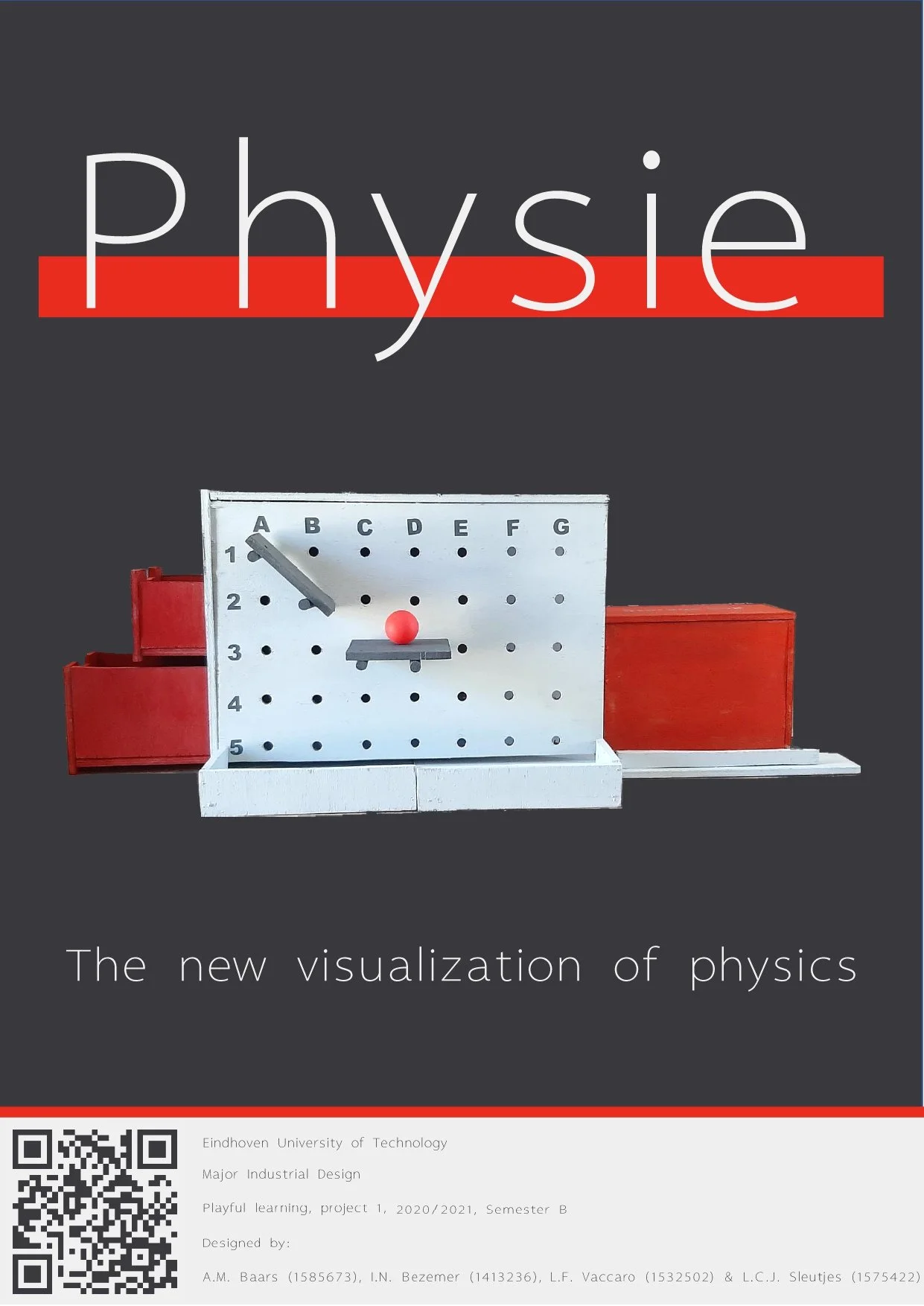
Remember the time you were in high school. You are in your physics class, doing advanced calculations using old-fashioned books. You and your classmates are struggling. Why is physics so abstractive? You are wondering how the current learning method can be replaced by a more innovative one, one that makes physics less abstract. This problem we tried to solve with Physie, a hands-on approach for learning physics more visually and interactively.
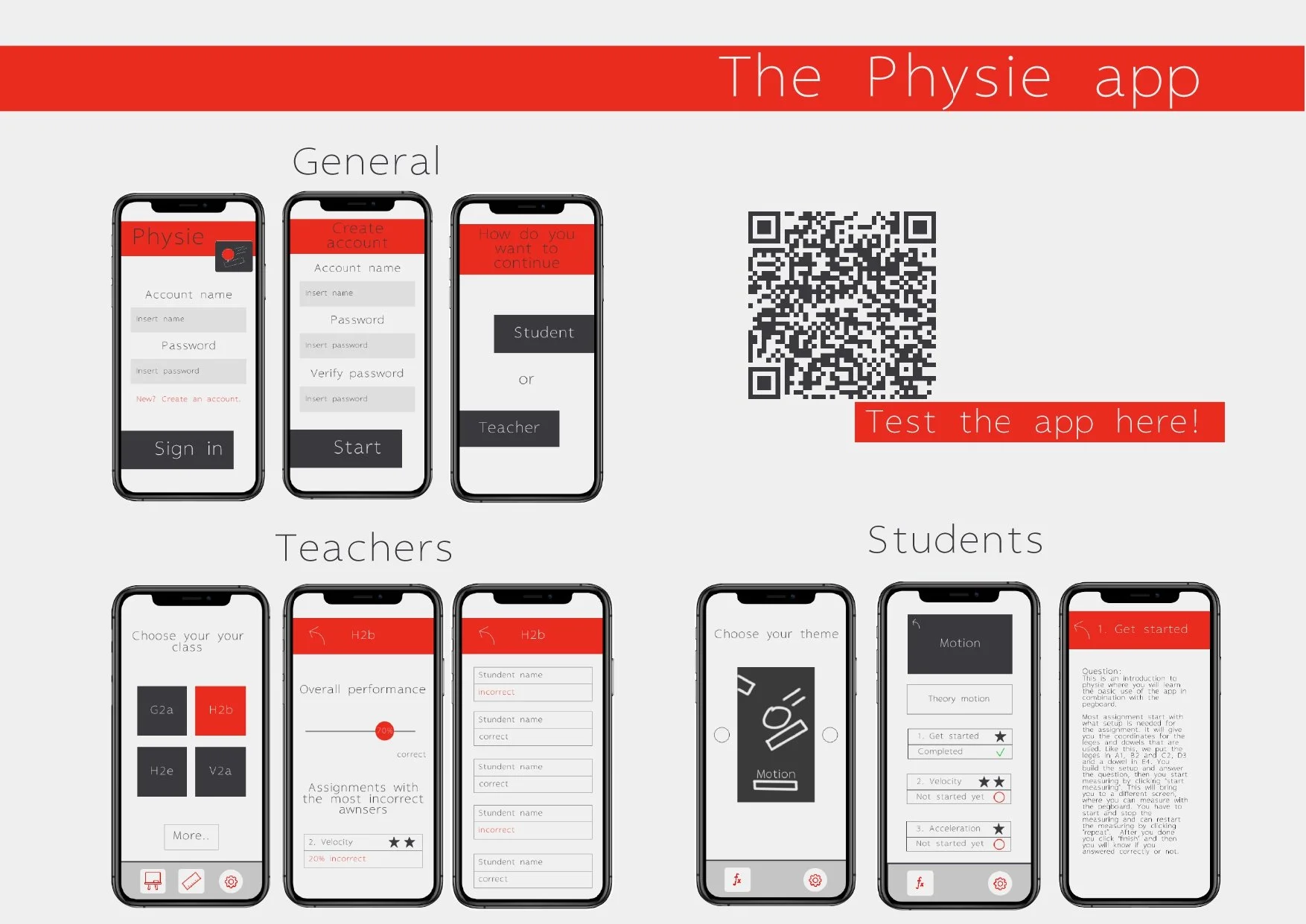
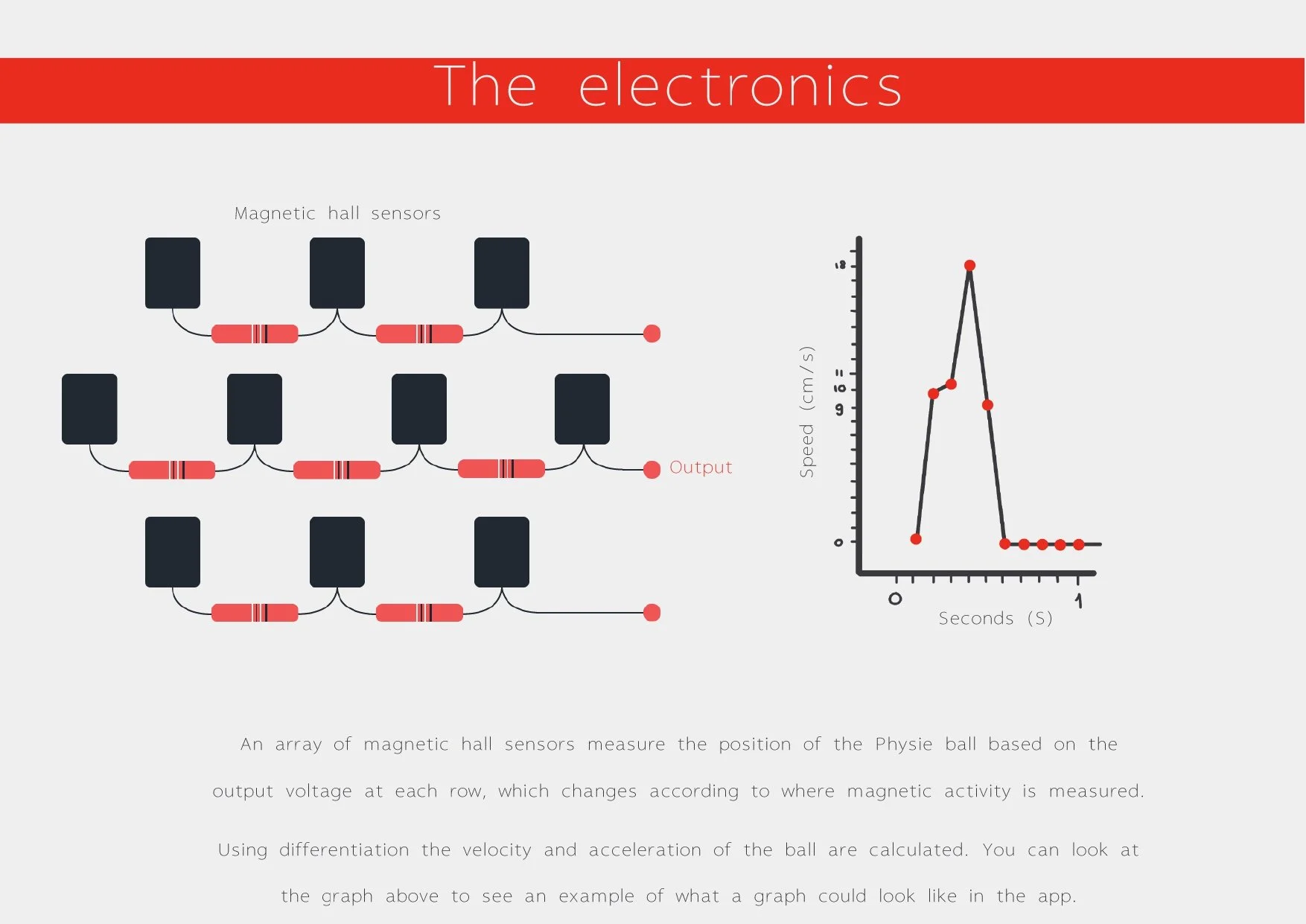
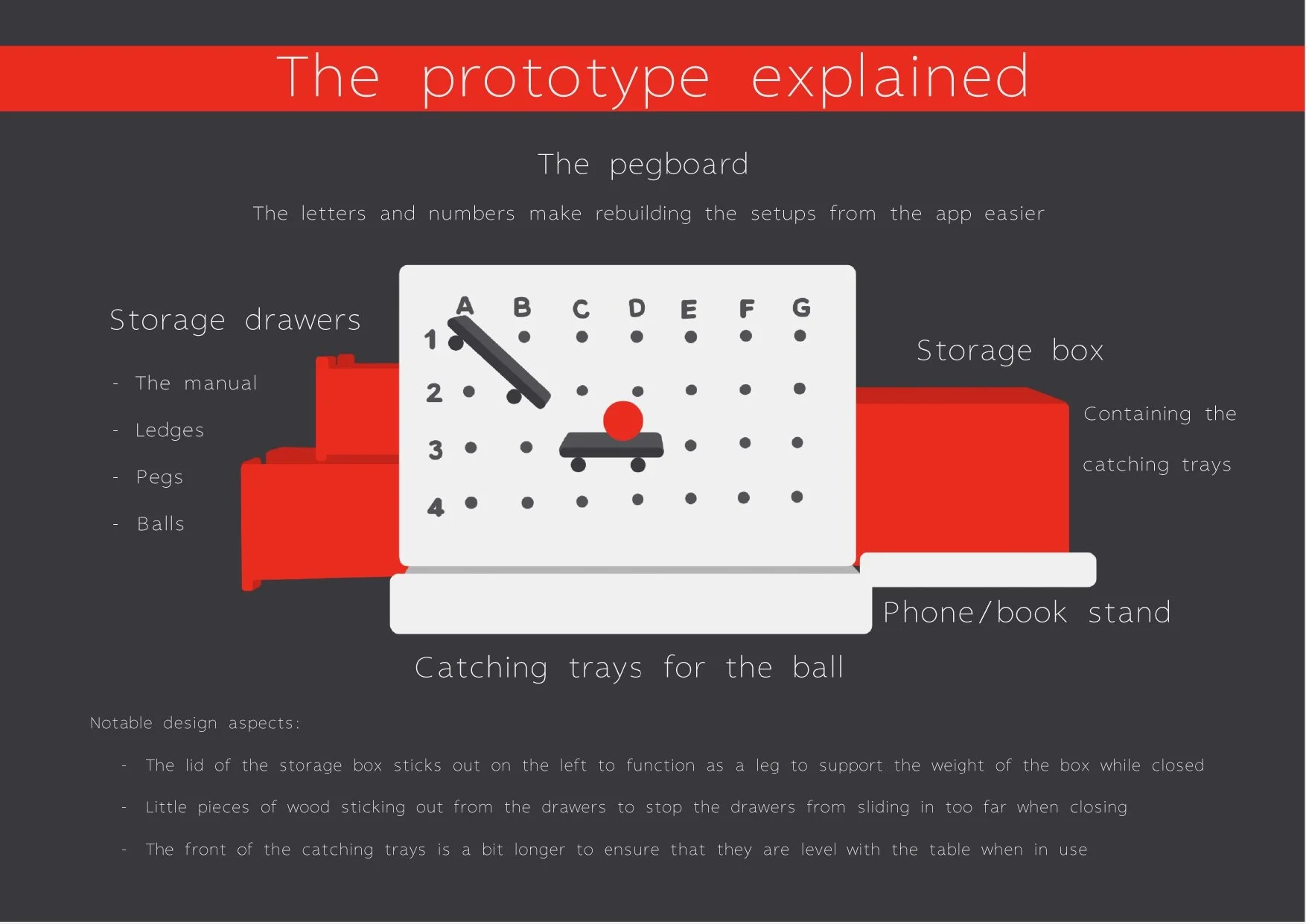
Our design process began with brainstorming, defining, and analyzing the problem. We came up with a physics ball to make the subject more interactive. This ball uses the principles of embodied learning, which can support the learning of less intuitive subjects, including physics. As the physics ball only supports the domain movement, we iterated upon the design concept to make it more diverse. This resulted in a pegboard used for building physics setups to support physics assignments. We visualized this design in a low-fidelity prototype. We iterated upon the dimensions and the number of holes of this prototype as recommended in the user tests. This resulted in our final design, the design of Physie, the new visualization of physics.