Past
In 2020, I finished high school and started my industrial design bachelor. I chose this study as I thought it would fit really well with my interest of science and art. But also the way this study would be taught with a mix of theory and practical really spoke to me. As I am dyslexic and study just consisting of reading, writing and lecture did not excite me.
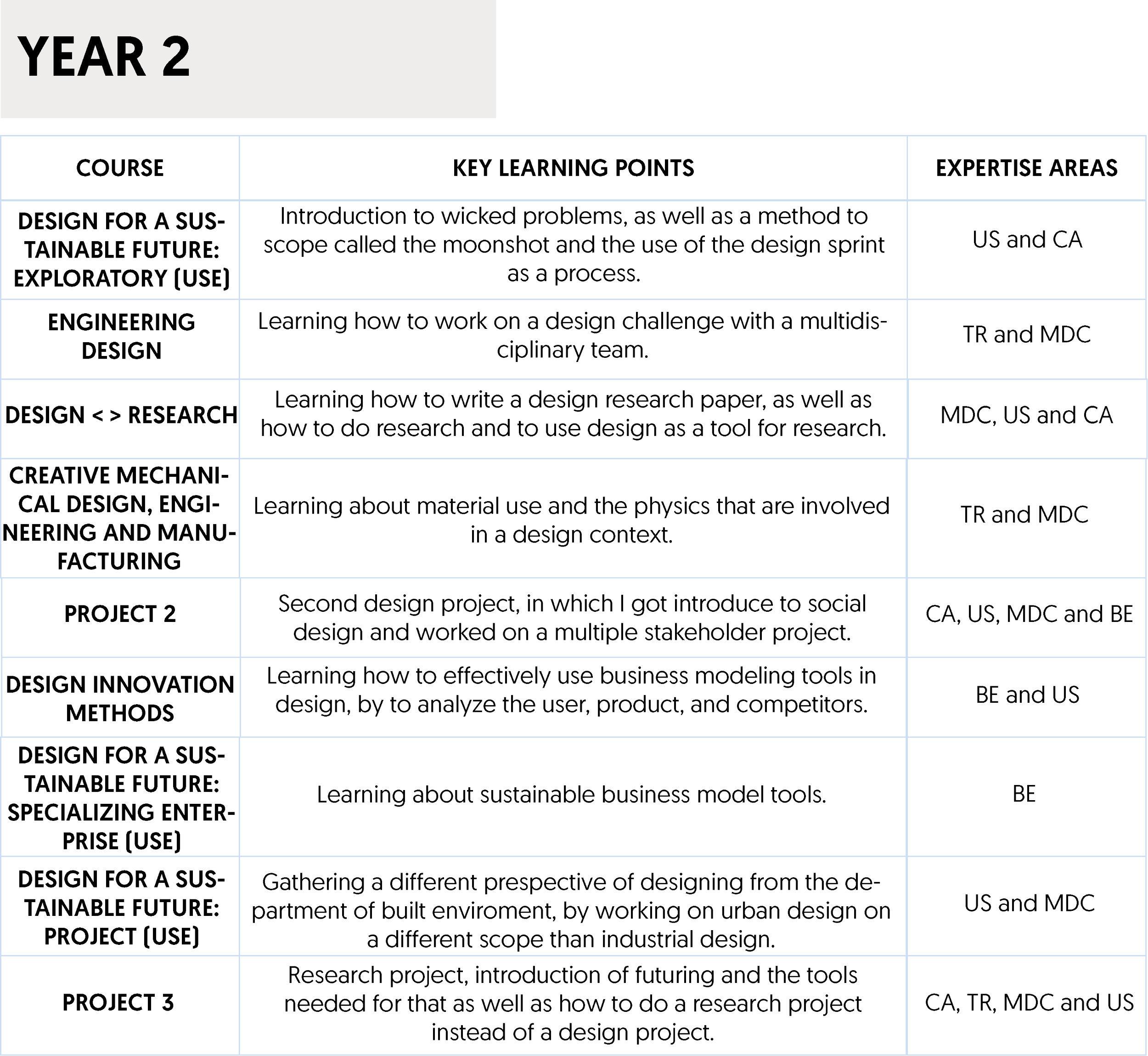
In my first year, Covid-19 had quite an impact on the study, as it almost entirely was online. During this year I learned the basics of designing and every other skill that is needed for it. This year I learned the most, as almost everything was new to me. However, this learning of the basics and the fact that it was online left me a bit unsure. I did still know that this was the study for me, but I did not know what my vision really was or would be. I like user interaction and found the topic of climate change interesting. So my goal for the second year was to explore and find out what my vision was.
In my second year, I was a part of the transforming practice squad and took the USE line of course about sustainable future. These introduce my to the concept of wicked problems as well as the realm of social design. Which still informs my vision. In the second half of the year, I decided to focus on business and entrepreneurship, as in my first year I did not do allot with this expertise area. I thought I was not going to like it, however I was wrong. I really enjoyed the analytical part of business. In addition to these business courses, I had my first research design project. Which I enjoyed allot and made me realize that I now had to figure out how research fits in with my professional identity and vision in the next year.
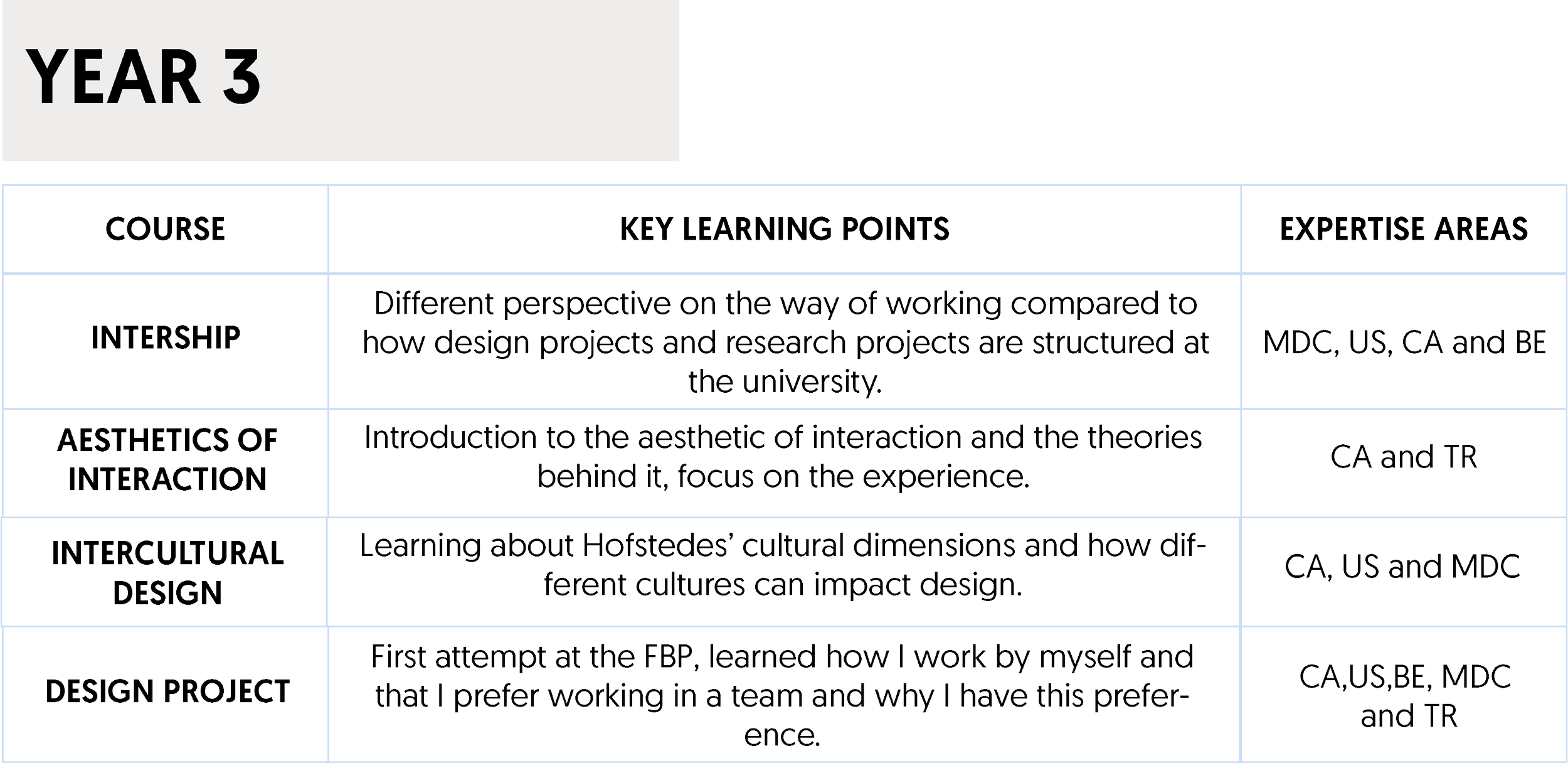
So in my third year, I did an internship at DuneWorks. Which is a company that does research, advice, coordinating projects and giving trainings and workshops. During my time at DuneWorks I learned that research is a starting point for me to explore from. But it still does impact my design process in the later stages as it informs how I set up, do and analyse user tests. During my internship, I also got more familiar with the energy transition and the challenges and technologies that are in place. I noticed that the energy transition at the moment is pushed forwards by technology. Which is logical as the new technology has made the transition possible. However, there is still the transition that needs to happen and that is more a transition in people behaviour, mindset and thinking around energy and the systems that govern and produce energy. This is what I wanted to explore in my FBP. Which I did in my first attempt were I design Wattson, a tool that allows the user to set up a trade by giving them information about their predicted energy use and energy production. However due to a combination of circumstance the project did not go to well. It did make me realize a few things about myself and how I like to work as well as that I find energy very interesting. As it is not visible and not tangible, but we interact with it every day. When looking at problems with energy you also will find social problems. Which make it so interesting to me and why I wanted to look into to the visualization of it.
Present
For my second attempt of the final bachelor project, I explored energy visualisation. My goal for this project was to make energy data easier to understand for the user by connecting the data with their daily practice. Allowing them to make their own decisions on how to reduce their energy consumption. I looked at real time energy visualisation, games with energy and ended up with the concept of a reflective annotative exercise. Which I developed into paper trail energy explorer, a tool box consisting of the annotation exercise and energy measure cards. The user is guided by an app through the exercise as they are ask which activities they have done and which of them make use of energy. Then they use these activities to annotate the energy graph. Afterwards they look at energy measures that the digital twin (in the app) picked out and they reflect on if they can do these measures as well as if they see any patterns or difference in their older exercises. This project made me realise that having a good set-up or plans for a project, especially one that you do by yourself is crucial. From having a general planning with the things you want to accomplish to a good set-up for research studies, it makes the project go smoother. Of course there are still things you can’t plan for but with practice and experience you become better at it.
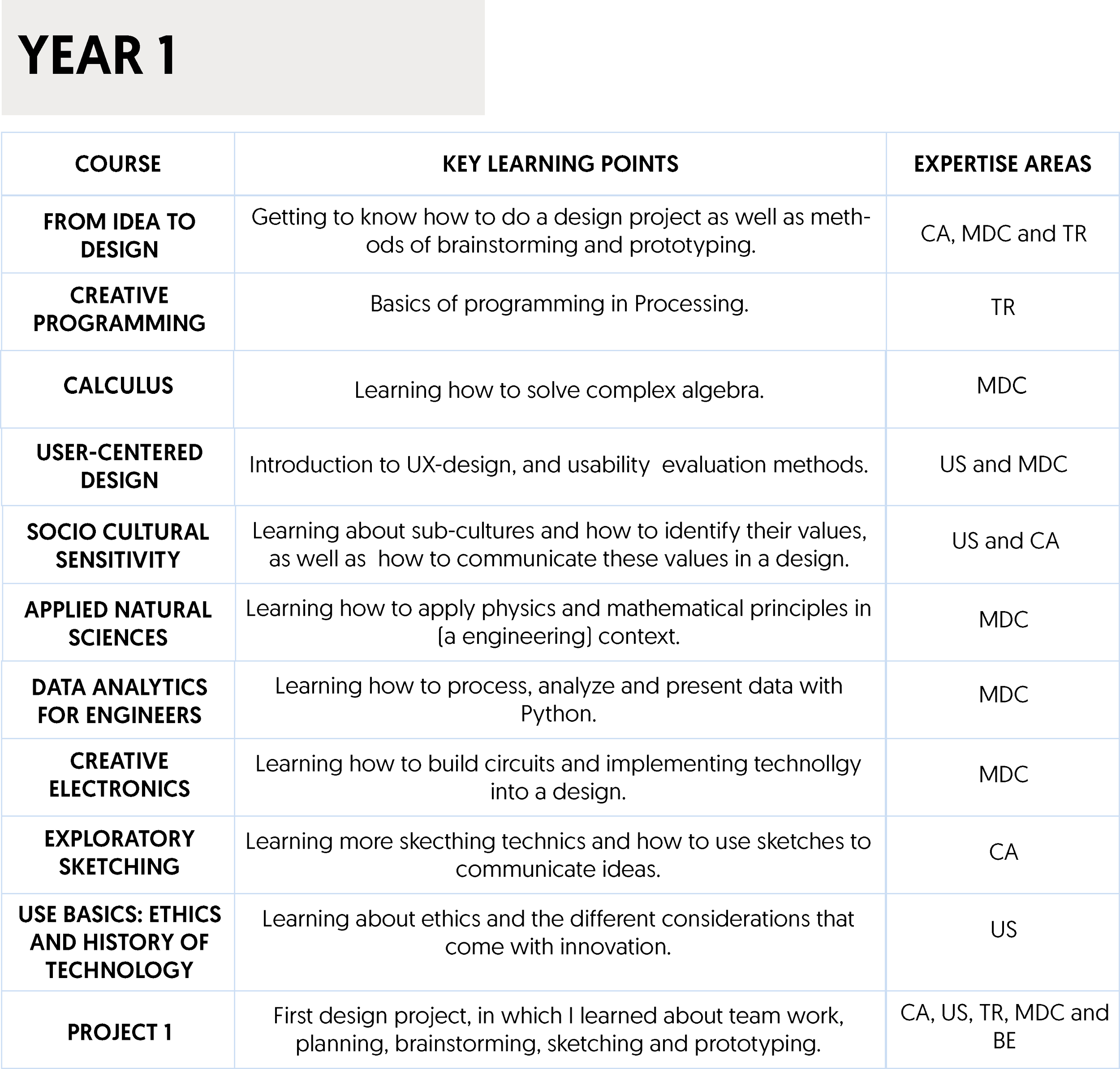
As my bachelor is ending this is a good moment to look at my development across the years. So I will be looking at the different expertise areas with in industrial design as well as all the courses I have taken whilst doing the bachelor.

Creativity and aesthetics
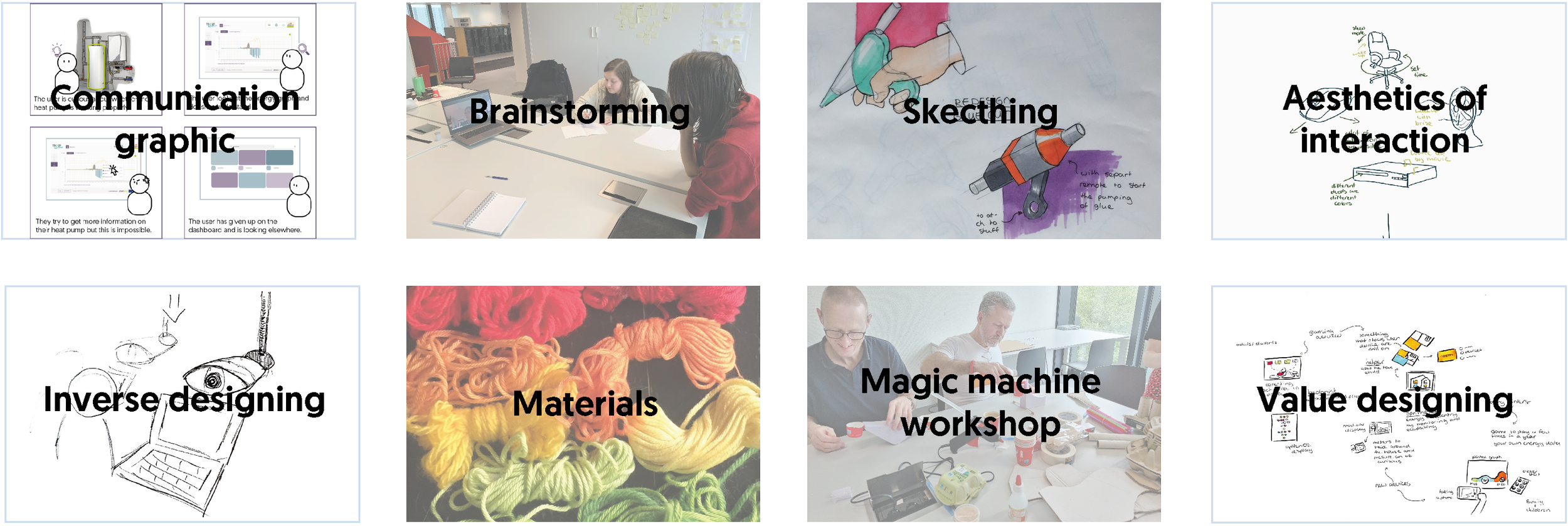
A big part of designing is being creative and coming up with new ideas. For this there are several brainstorm techniques, such as sketching, inverse designing and how to. All of which I used in various courses and projects. With these techniques you can accomplish different things. For example, with sketching you explore ideas and iterate on them as well as that you use them to communicate your ideas. But you can also be creative by designing for interaction, as the course aesthetics of interaction has taught me. By using interaction relabelling [Djajadiningrat et al., 2000], you can transform a chair into an alarm.
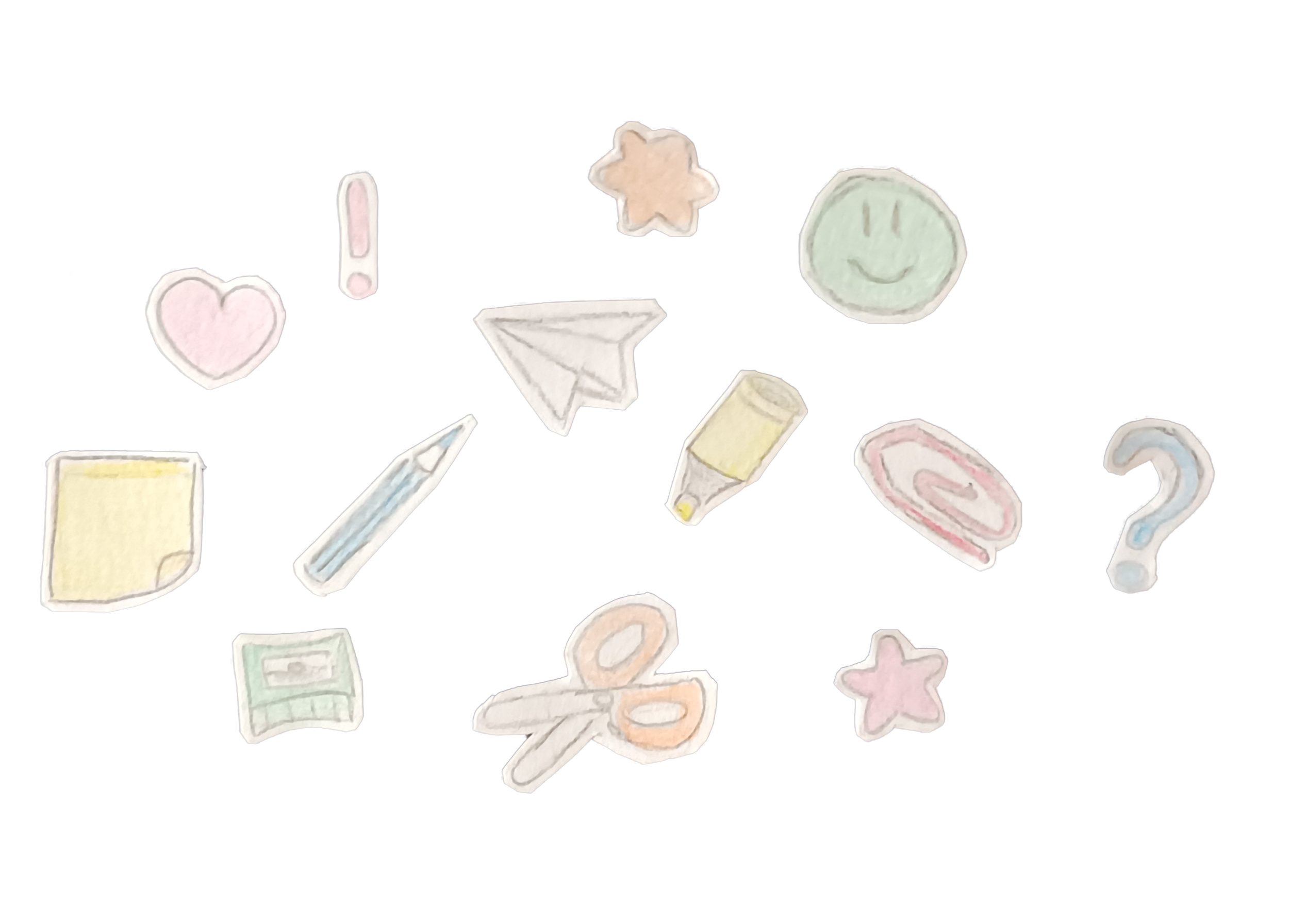
For my final bachelor project I decided to make the visual identity of paper trail tool box very sketchy and playful. As it is about annotating your energy data with stickers and pencils. Which meant that I chose pastel rainbow colours and drew a few sticker icons. Which I then used to decorate the tool box and the information booklet.
User and society
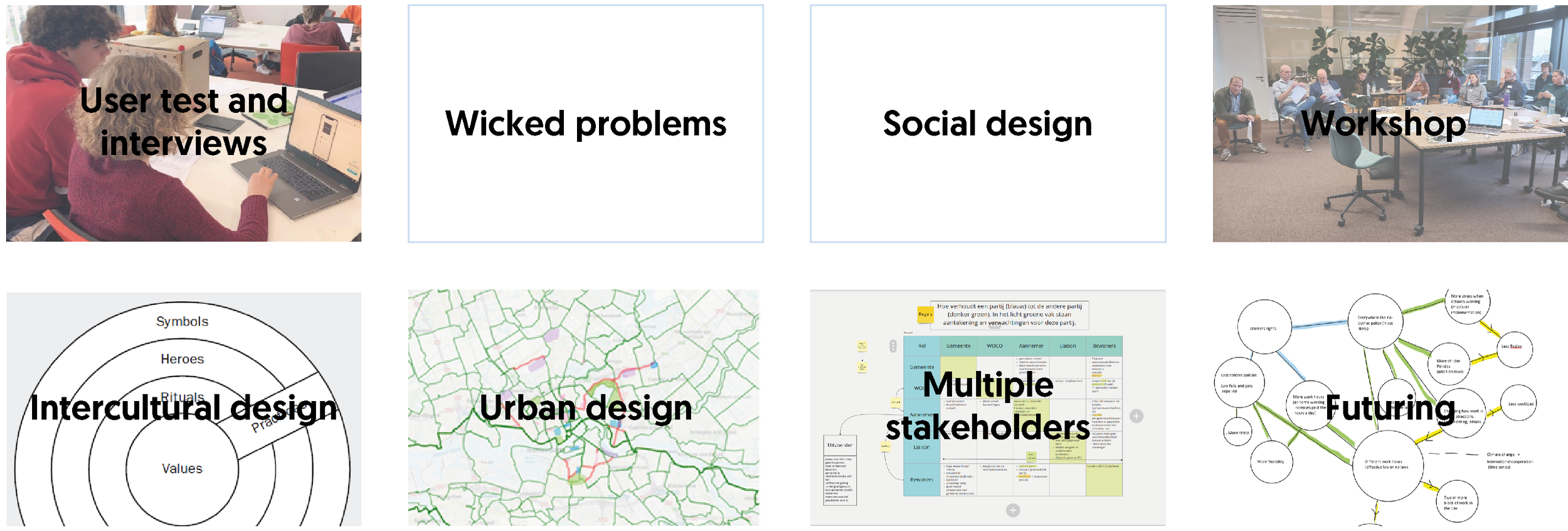
During my bachelors, I always gravitate towards this expertise area. As in my opinion this is what differentiates designers from others, the focus on the user but also what the bigger picture behind them is, society. Throughout my bachelor I have explored this area from different perspectives, the UX-design perspective with the course user-centered design, sub-cultures with the course socio-cultural sensitivity, urban design perspective with the course USE Design for a Sustainable Future: project, and how to design for different cultures with the course intercultural design. But also how to take on societal problems with the course USE sustainable, how to develop a future to design for, and how to deal with multiple stakeholders in a project.
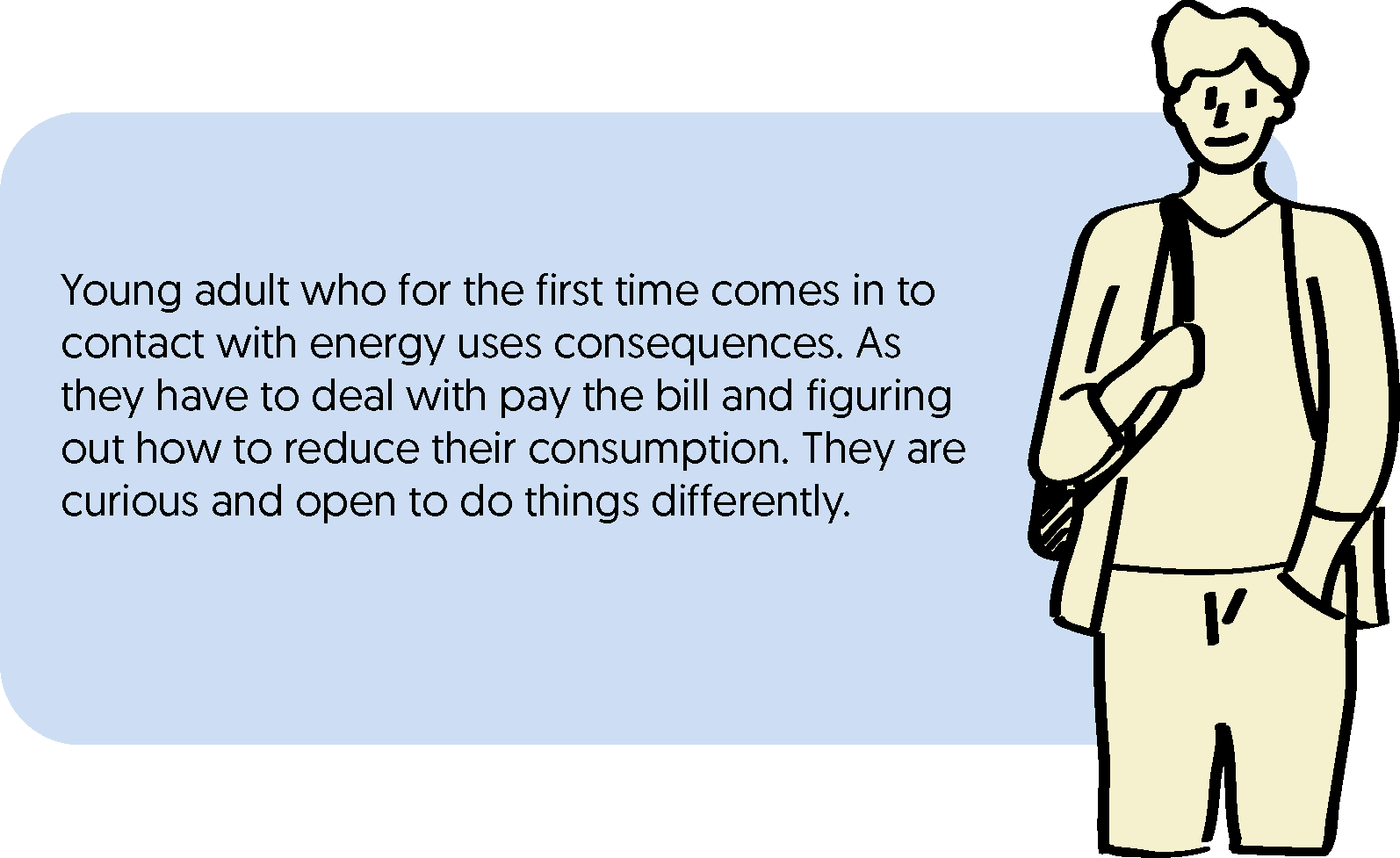
While developing the paper trail tool box, I considered a lot of different target groups as energy problems is something that allot of people deal with. I ended up with young adult who are confronted with the energy bill for the first time. With the help of a survey and interviews I made a persona. That was then used in the user test.
Technology and realization
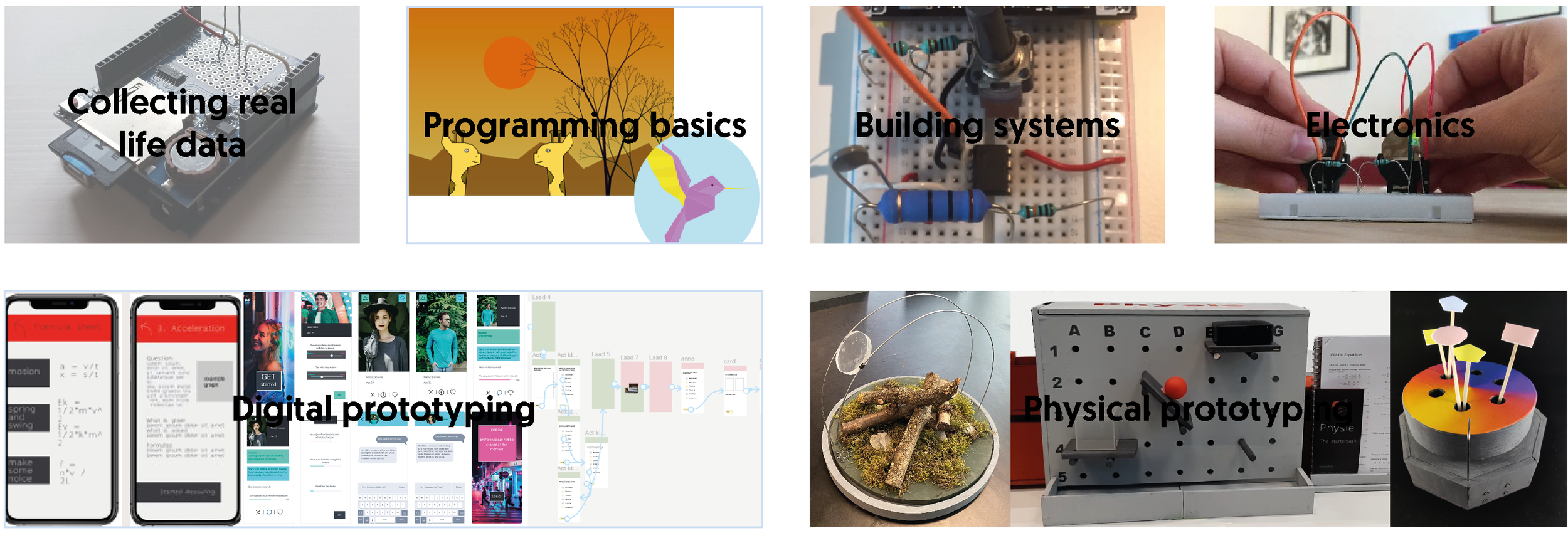
This expertise area focusses on realizing concepts and being able to experience these ideas. As I mentioned in the past section, in the first year I learned the basics of design and the skills require to design. So in the first year I learned how to program and build electrical systems to use in my designs, from the courses creative programming and creative electronics. As well as some hand-on experience with prototyping from all kinds of projects and courses. For a long time, I thought that this expertise area was all about making a high fidelity final designs. Which is not the most interesting part of designing for me. However, I have now realize that is about being able to show a concept and start a discussion and interacted an experience with it.
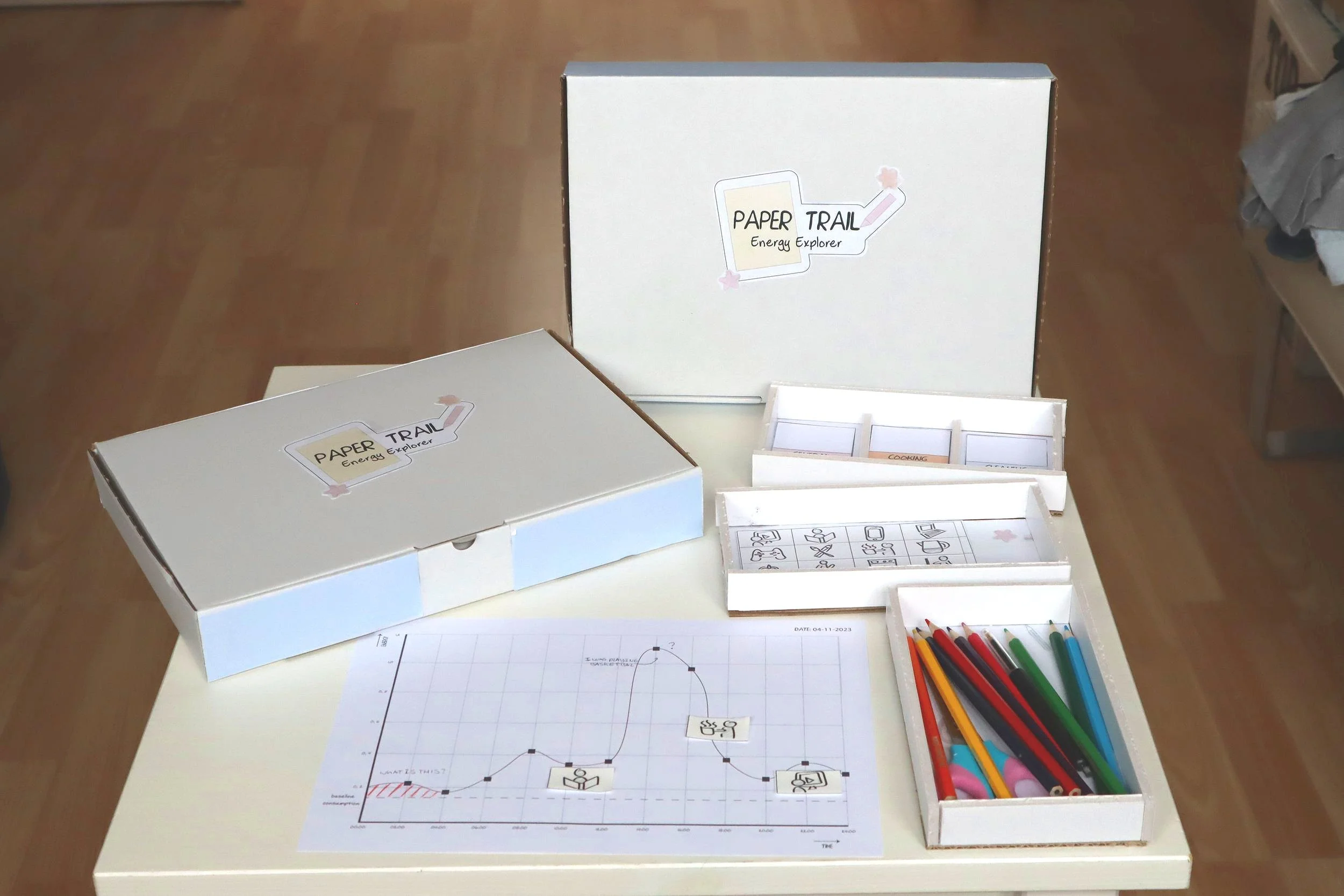
For my final bachelor project, I created two digital story prototypes. One website of an earlier iteration of paper trail energy explorer and the other of the app for paper trail energy explorer. However I wanted to let the user have the opportunity to interact with the app as well which is why I also created an interaction prototype which is a simpler version of the app. I also made the physical toolbox with the stickers and the energy measure cards.
Math, data and computing
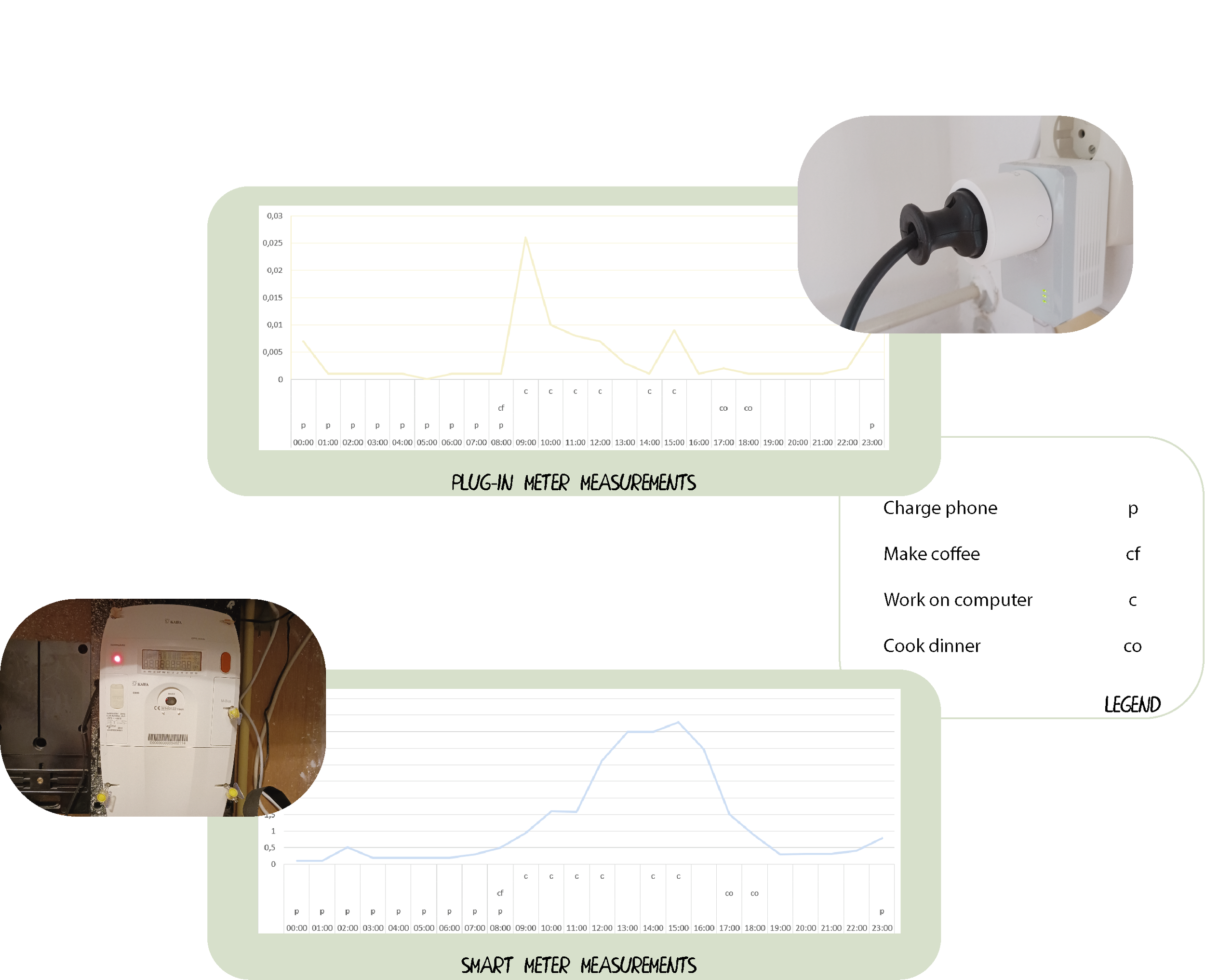
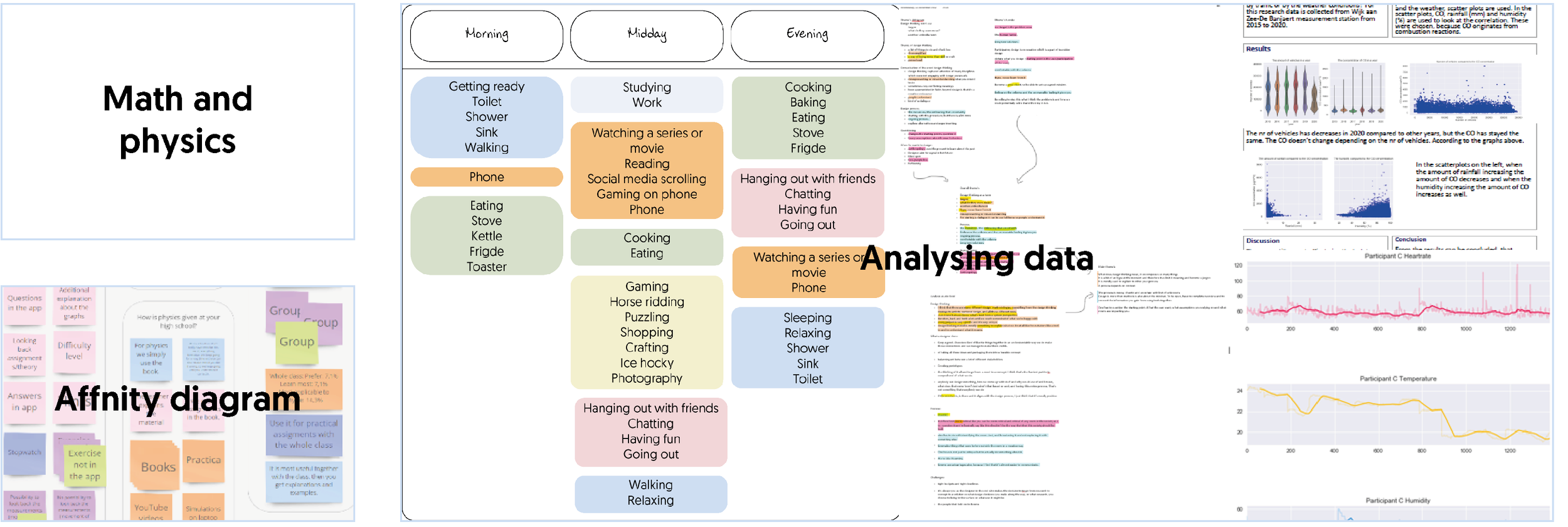
Designing for complex problems, brings complex data. Which needs to be deciphered and gathered. The course data analytics for engineers has taught me how to deal with data in python and how to analyse quantitative data. Whereas, the courses user-centered design and research design, have taught me how to deal with qualitative data. This data can be gathered by preforming an interview or collecting it with sensors. The latter of which I was taught in the course making sense of sensors.
Durning my final bachelor project, I dealt with allot of data. From the quantitative energy data that I collected in my autoethnographic study to the mixed data from the survey, interviews and user test.
Business and entrepreneurship
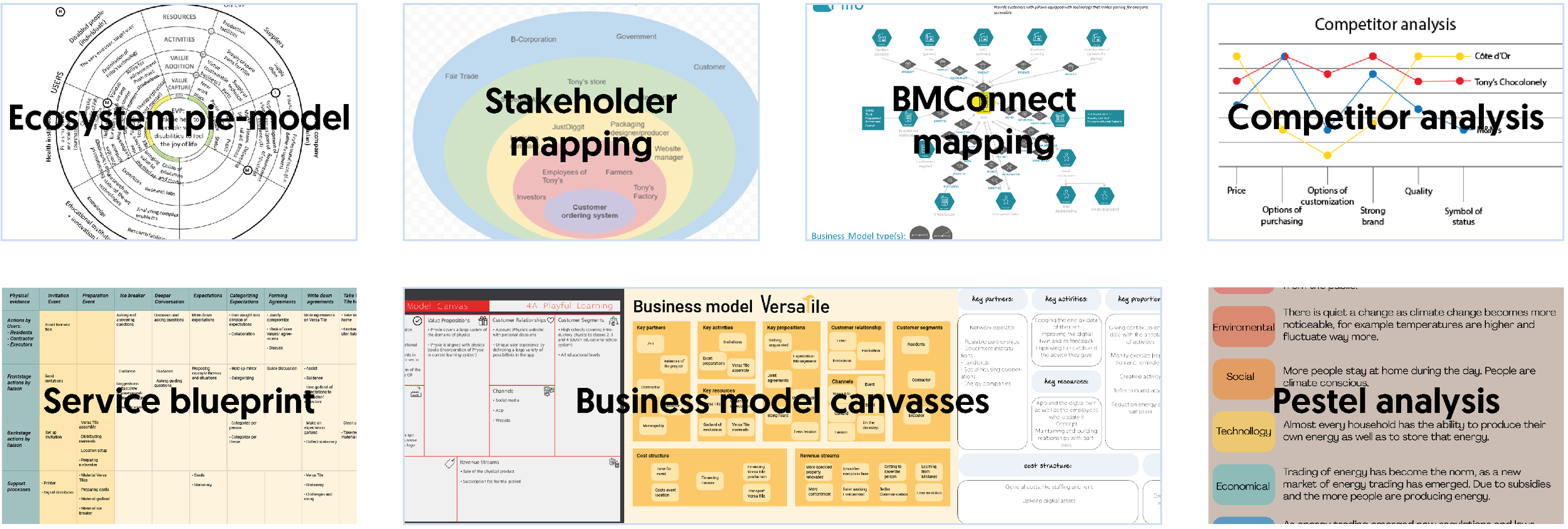
Creating a meaningful product and or service requires to look at the value proposition of a product as well as the market and trends. As I mentioned in the past section, I thought I was not going to like diving into this expertise area. However, I was wrong, as I found it very interesting to analyse the market and the product with various business canvases. Which the courses design innovations and use enterprise introduced me to. With this knowledge, I even looked into the cooperations business models for my internship.
For the development of paper trail energy explorer, I made use of the business model canvas. To iterate the design by looking at different target groups and then to define what value my final concept promotes with a business model canvas and a persona of the target group.
Design research processes
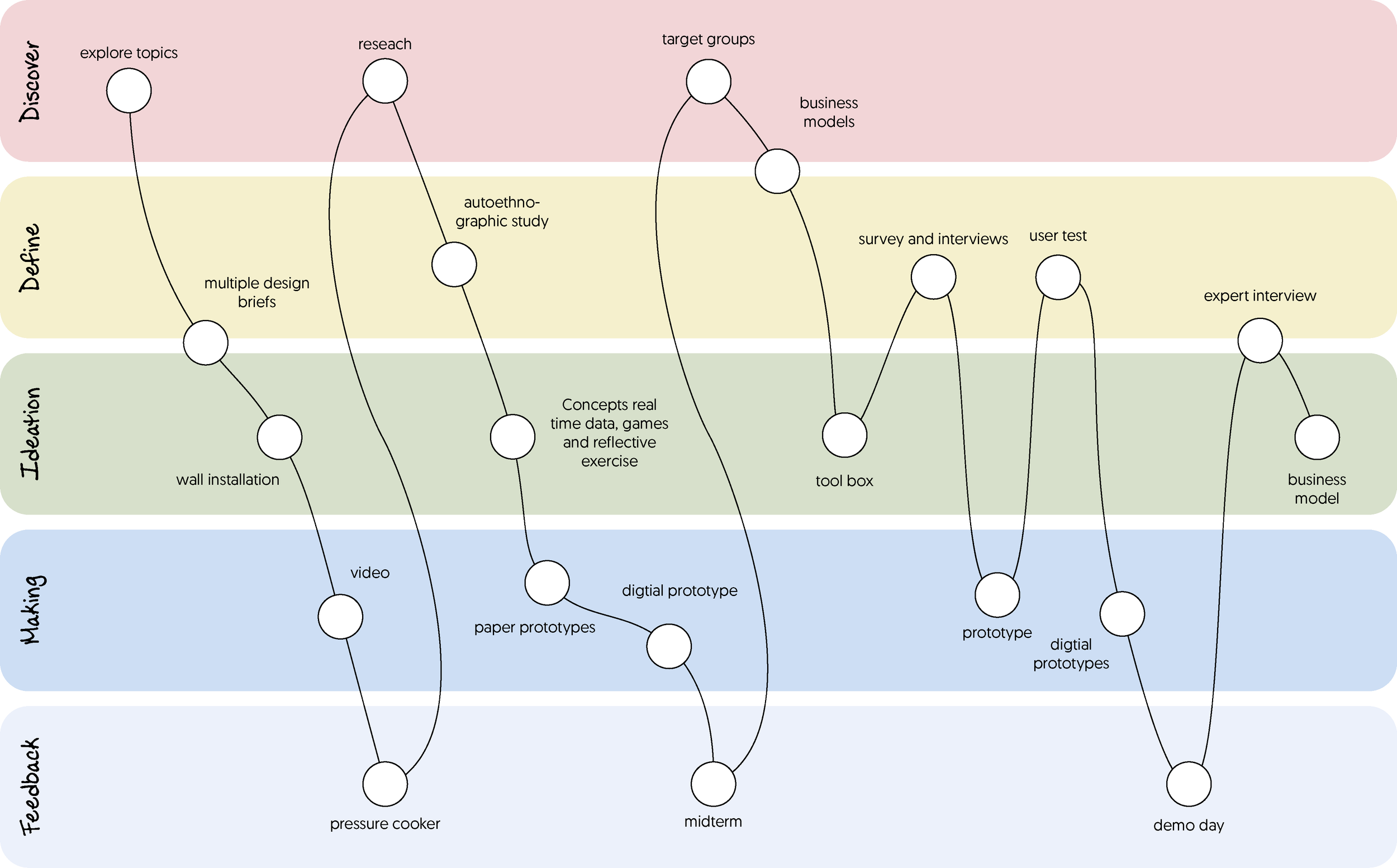
Before I started my bachelor I knew nothing about the design process. I was however familiar with the process of making art in which you also do some of the same steps. As you also start with quick sketches to find an idea, then you test some different materials and finally you make the final piece. Throughout my bachelor, I got familiar with a few different design processes, such as the double diamond process, the design sprint and a design process within the framework of transforming practices. In my final bachelor project I ended up using the double diamond process or a bit of a modified version of it. For me it is really helpful to keep this diverging and converging in mind as I otherwise would just keep ideating.
Future
I knew now for a while that I wanted to do a master in industrial design. I have this feeling that I am not quite done with learning in this traditional setting. While you do learn from working, it is in a different way. I feel like the university does offer a wider spread of knowledge and methods whilst while working you learn specific practical knowledge and the refinement of skills. Therefore, I decided that I would continue studying and do a masters. I think that this will also fit a bit more with me as the importance of research is (or can be) greater in the master’s program. So, I plan to do an industrial design master in Eindhoven.
In line with this focus on research, I wanted to get more into how to effectively do research. So which methods to use, and to get some more experience with setting up a study and performing the research. As I noticed the for example estimating how much time the participant needs and how much time the study needs is something a I struggle with.